Analysis: Brazil 3x0 Scotland - World Cup 2026
Se você quiser ler este texto em pt-br, clique aqui.
Introduction
This Wednesday (06/24), the Brazilian National Team wrapped up their 2026 World Cup group stage campaign against Scotland at the Miami Stadium in Florida. Backed by an overwhelming majority of Brazilian supporters who set an atmosphere of utmost confidence, the squad confirmed their favorite status and secured a comfortable 3-0 victory, dominating the match from start to finish.
Following an initial draw against Morocco and a resounding win over Haiti, this result guaranteed Brazil the outright lead of Group C with 7 points. Scotland, on the other hand, ended their group stage run with 3 points and awaits the outcome of other groups to see if they advance as one of the eight best third-placed teams.
Tactically, Brazil took to the pitch in a 4-3-3 formation, transitioning into a 4-2-4 during the offensive phase and a 4-4-2 in their defensive organization. The main change to Carlo Ancelotti’s starting XI occurred on the right wing, with Rayan stepping in to replace the injured Raphinha. Scotland adopted a more conservative approach, lining up in a 4-2-3-1 with striker Lawrence Shankland operating as a traditional number nine.
Match Summary
First Half: Pressing Triggers and Vini Jr.'s Freedom
The pre-match expectation that Brazil would face a deeply entrenched and reactive side was confirmed as soon as the ball rolled. Scotland set up in a low block, aiming to deny space through the middle and force the play out wide. However, Brazil found the tactical solution just 7 minutes into the game: efficient high pressing. Rayan and Vinícius Júnior pressed the opponents’ build-up play, forcing an error that resulted in a turnover and a clinical finish by the number 7 to open the scoring.
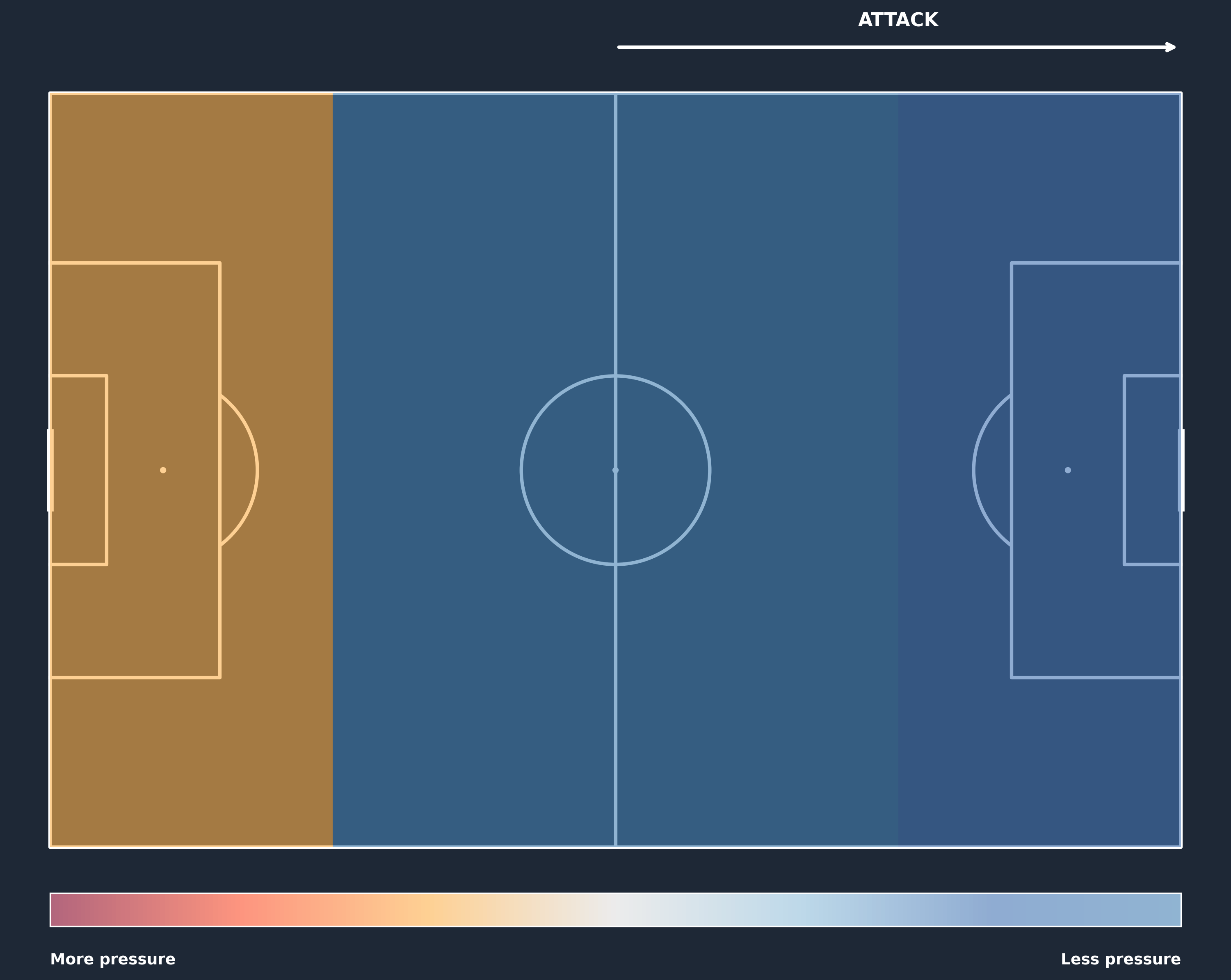
Scotland’s passivity in the defensive phase is perfectly illustrated by the team’s Passes Allowed Per Defensive Action (PPDA) map. The metric reveals that the European side’s effective pressing was concentrated in their own defensive third (warm tones), offering enormous freedom and playmaking time to Brazil’s creative department across the rest of the pitch.
With the game firmly under control, the Brazilian team occupied the spaces on the pitch exceptionally well. Danilo and Douglas Santos provided width on the flanks, which allowed Vinícius Júnior to roam freely through the central channel. To balance this movement, Matheus Cunha dropped deep, acting almost as a number 10 or a false 9, dominating the area alongside Lucas Paquetá, who stood out in his distribution and operated as a key playmaker for the number 7.
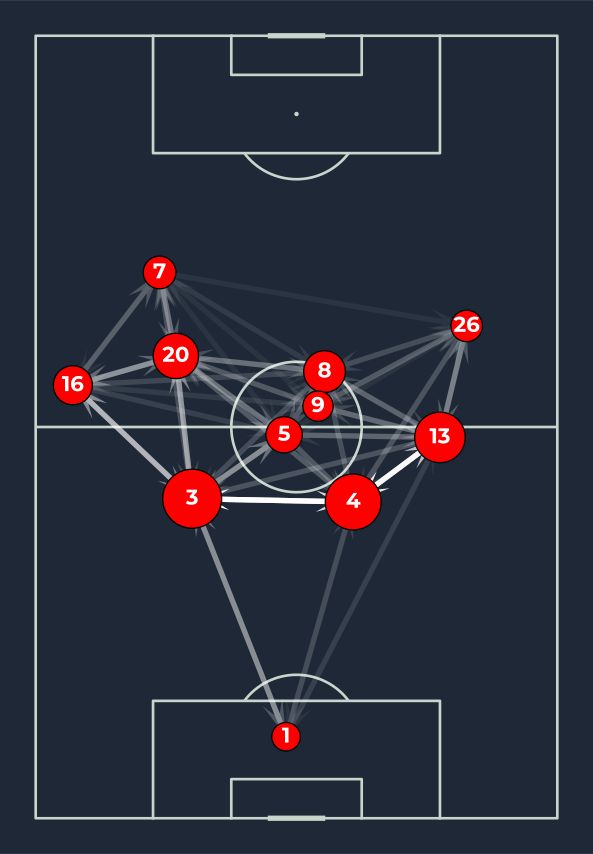
The team’s fluidity is evidenced by Brazil’s pass network, which highlights strong connectivity through the central corridor and the active involvement of all offensive cogs in patient build-up play. Furthermore, we can observe, once again, the significant impact of the center-backs—especially Marquinhos—in the build-up phase, as he was the most influential player in terms of passing.
Around the 15-minute mark, Brazil opted to relinquish possession (Scotland reached up to 58%), but tactical comfort prevailed. Brazil kept their lines compact, denied central penetration, and restricted the opposition to mid-range shots. On the right, Rayan was highly active and aggressive in exploiting tight spaces. The first-half dominance was capped off in stoppage time (45+3’), when Bruno Guimarães found Vinícius Júnior in the box with a precise cross. Vini headed into an open net, closing the first half with 11 Brazilian attempts on goal and the reclamation of possession (52%).
Second Half: Fast Transitions, Defensive Control, and Neymar's Return
Needing a result, Scotland came back from the break pressing high and pumping balls into the box. The European side pushing their lines higher up the pitch created the exact ideal scenario for Brazil to exploit fast transitions.
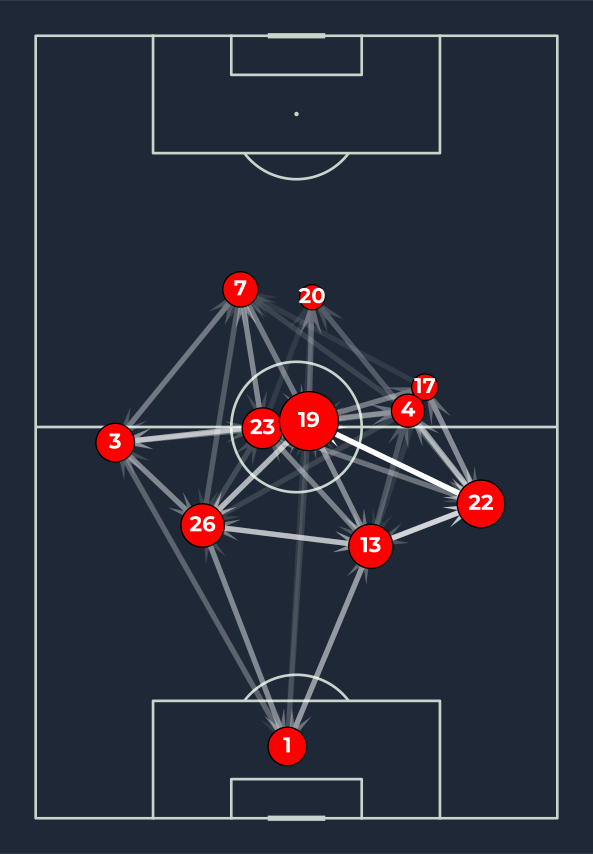
The Scottish team’s pass network illustrates this attempt to overload the attacking half, which frequently faltered due to a lack of creativity to break down the Brazilian defensive system.
At the 60-minute mark, Brazil’s technical superiority killed off the match. Bruno Guimarães, dictating the tempo and delivering decisive passes, orchestrated an excellent counter-attack and found Matheus Cunha. The center-forward made no mistake, scoring his 3rd goal of the World Cup and crowning a highly tactically disciplined performance.
The Brazilian posture following the third goal can be analyzed through their own PPDA map. Without the need to maintain an exhausting physical intensity in the attacking half, Brazil dropped their block and concentrated their effective pressing zone in the defensive midfield area. The system proved solid, with standout performances from the center-backs, the full-backs, and Alisson, who displayed absolute assurance whenever called upon.
.png "Brazil's PPDA Map")
With the victory secured, the manager brought on Endrick, Alex Sandro, Fabinho, and Martinelli. However, the biggest emotional milestone of the match was reserved for the 76th minute: Neymar’s return to the pitch after three years without playing for the national team. Playing for roughly 20 minutes at a measured pace, the number 10 saw plenty of the ball, as his teammates looked to involve him in the build-up naturally, helping him regain his match rhythm.
Conclusion
The commanding 3-0 victory attests to the clear tactical and emotional evolution of the Brazilian National Team throughout the group stage. The squad demonstrated tactical depth: they showed the ability to dismantle a tight low block early in the match through high pressing, and exhibited the maturity and defensive solidity to concede territory to Scotland and kill off the game on the counter-attack in the second half.
The absolute highlight goes to Vinícius Júnior’s starring role, the synergy of the central engine room featuring Bruno Guimarães and Matheus Cunha, and a solid performance by Rayan, who earned his first start for the national team, proving vital in tracking back defensively and pressing the attack. Furthermore, Neymar’s return, so highly anticipated by Brazilian fans, brings a more technical and experienced leadership to the squad.
Qualifying in 1st place, Brazil reaches the Round of 32 presenting a physical and tactical performance vastly superior to their start in the competition. The next challenge is already scheduled for June 29th at the NRG Stadium in Houston. Looking ahead to the knockout stages, Brazil awaits the runner-up of Group F. This spot will be decided between Sweden, Japan, and the Netherlands, who play this Thursday (06/25) to determine who advances in second place from the group.
Enjoy Reading This Article?
Here are some more articles you might like to read next: