Analysis: France vs Spain and England vs Argentina - World Cup 2026
Se quiser ler este texto em pt-br, clique aqui.
Analysis: France 0-2 Spain
Introduction
In a European classic that pitted structured collective play against a reliance on individualities, Spain overcame France 2-0 and secured their qualification for the next stage. The clash highlighted the Spaniards’ tactical maturity and exposed the chronic problems of a French national team that, despite being star-studded, was ineffective as a team.
Tactically, France started the match in a 4-2-3-1, centralizing striker Mbappé, who was supported by midfielders Dembélé, Olise, and Barcola. On the other hand, the Spanish squad opted for a 4-1-2-3, maintaining an attacking trio with Lamine Yamal, Álex Baena, and M. Oyarzabal.
First Half: French passivity and the fatal error
The opening minutes were highly exploratory, with defenses prevailing over attacks. France tried to escape Spain’s first pressing line by frequently utilizing goalkeeper Maignan. Working very well with his feet, he acted as a playmaker, distributing excellent ground passes that managed to break the initial pressure.
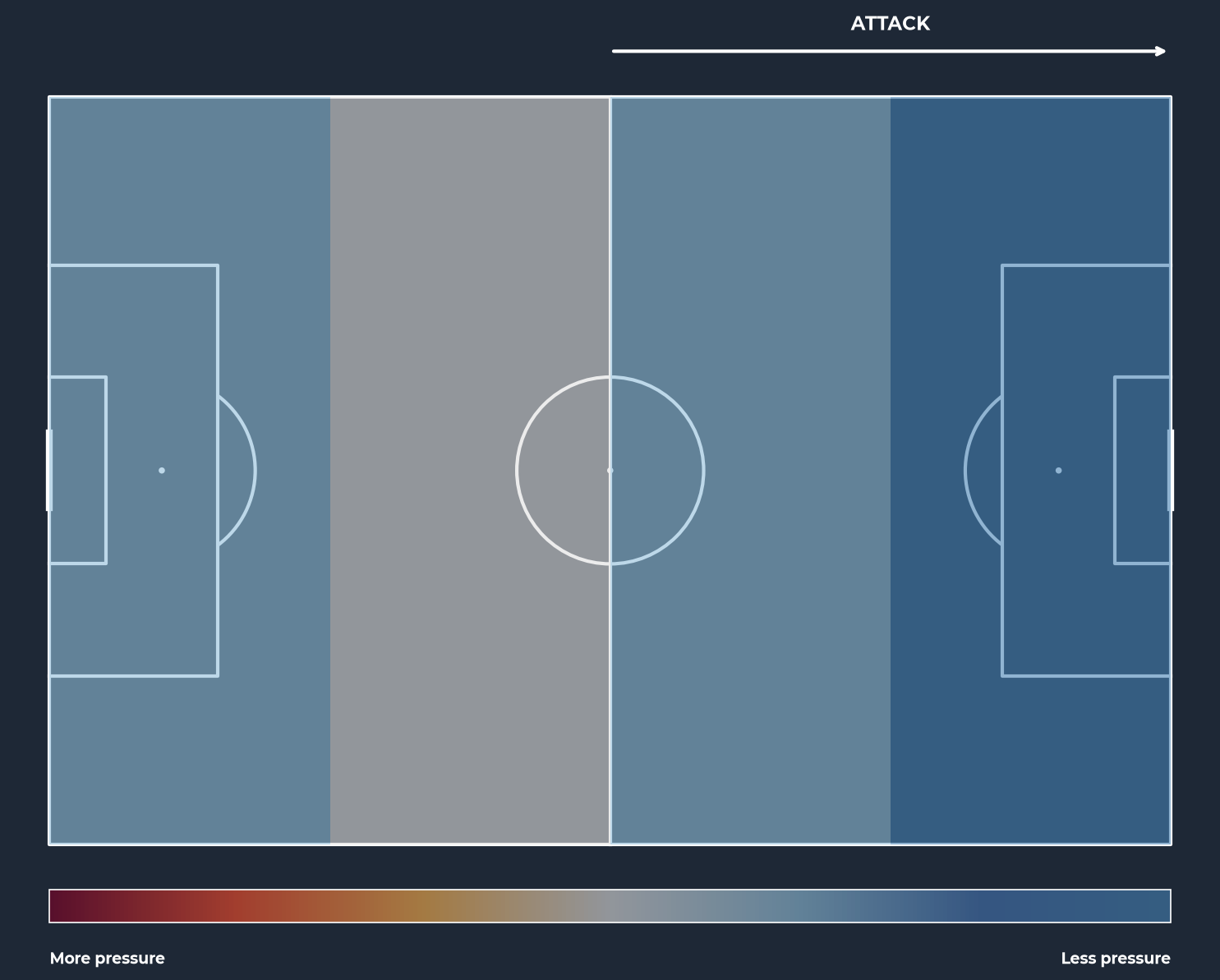
However, the major difference in the first half lay in the intensity (or lack thereof) without the ball. France’s PPDA (Passes Per Defensive Action) map reveals a posture of extreme passivity. The French chart is entirely covered in cool tones (blue and gray), indicating that the team abandoned any aggressive combat, whether in attack or defense, allowing Spain to control the game comfortably.
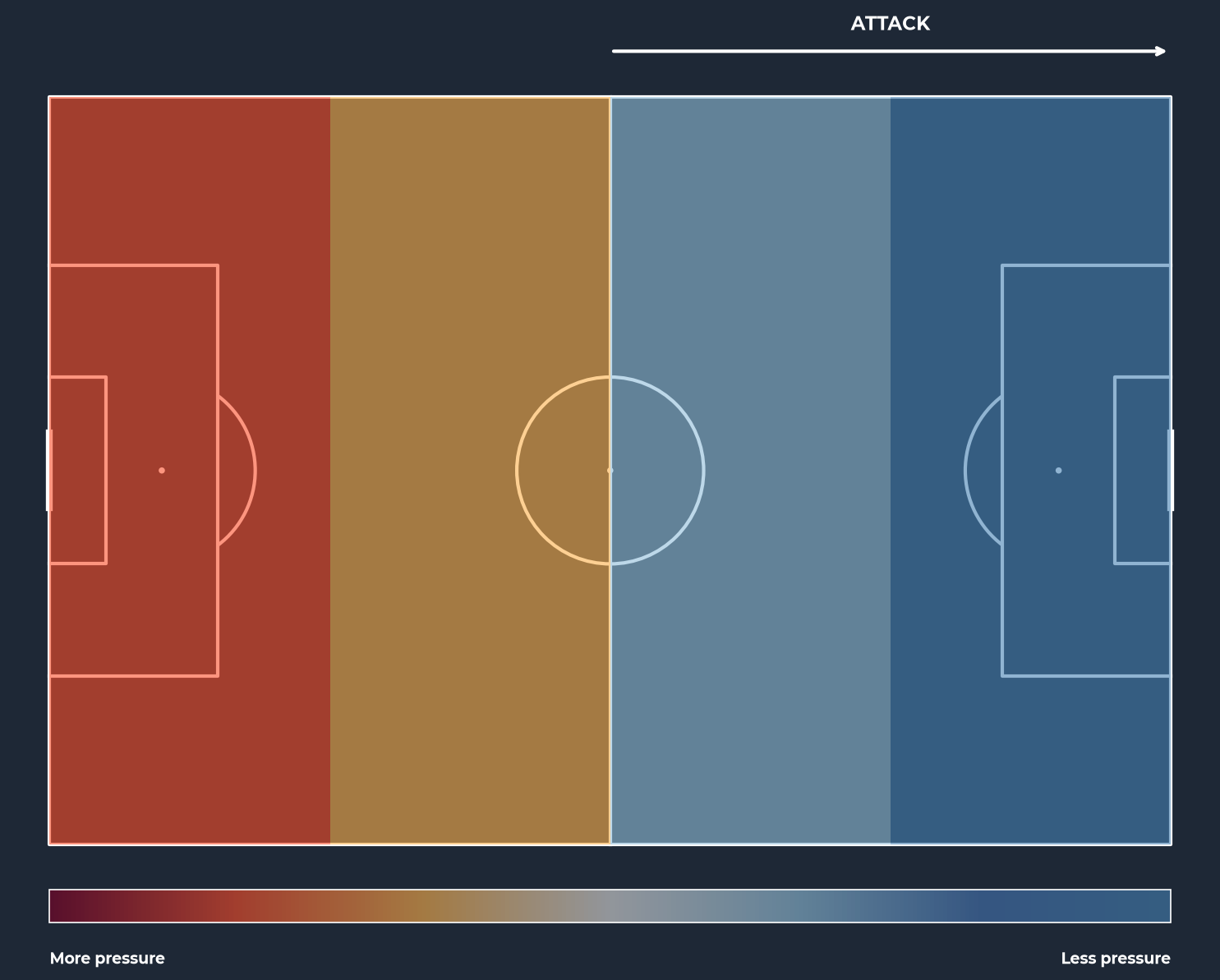
Spain, on the other hand, adopted a highly disciplined mid-low block. Their PPDA map shows blue tones in the attack (abandoning suffocating pressure up front), but an intense red zone in their own defensive half. In other words, Spain waited for France to advance before aggressively making a challenge.
At the 19-minute mark, the game’s stability was broken by an individual flaw. Following an insightful anticipation by Lamine Yamal, Digne mistimed his kick while trying to clear a dangerous ball, committing a penalty. Oyarzabal stepped up for the kick and struck it with great class; Maignan guessed the right corner but couldn’t prevent the 1-0.
With the advantage, Spain grew into the game. At 37 minutes, the team recovered the ball at the edge of the French box and bypassed the defense with a beautiful exchange of passes: Yamal and Dani Olmo played a one-two, and the ball reached Fabián Ruiz to finish from the six-yard box. Upamecano managed to make a crucial block. The first half ended with the goalkeepers barely using their hands, such was the tactical gridlock.
Second Half: Spain's territorial dominance and French disconnection
Returning from the break, Spain turned their positional dominance into more goals. At 12 minutes, in a beautiful collective play, Pedro Porro played a one-two with Dani Olmo, penetrated the box, and extended the lead: 2-0. At 15’, Yamal even scored a stunning goal, but the play was correctly disallowed for offside.
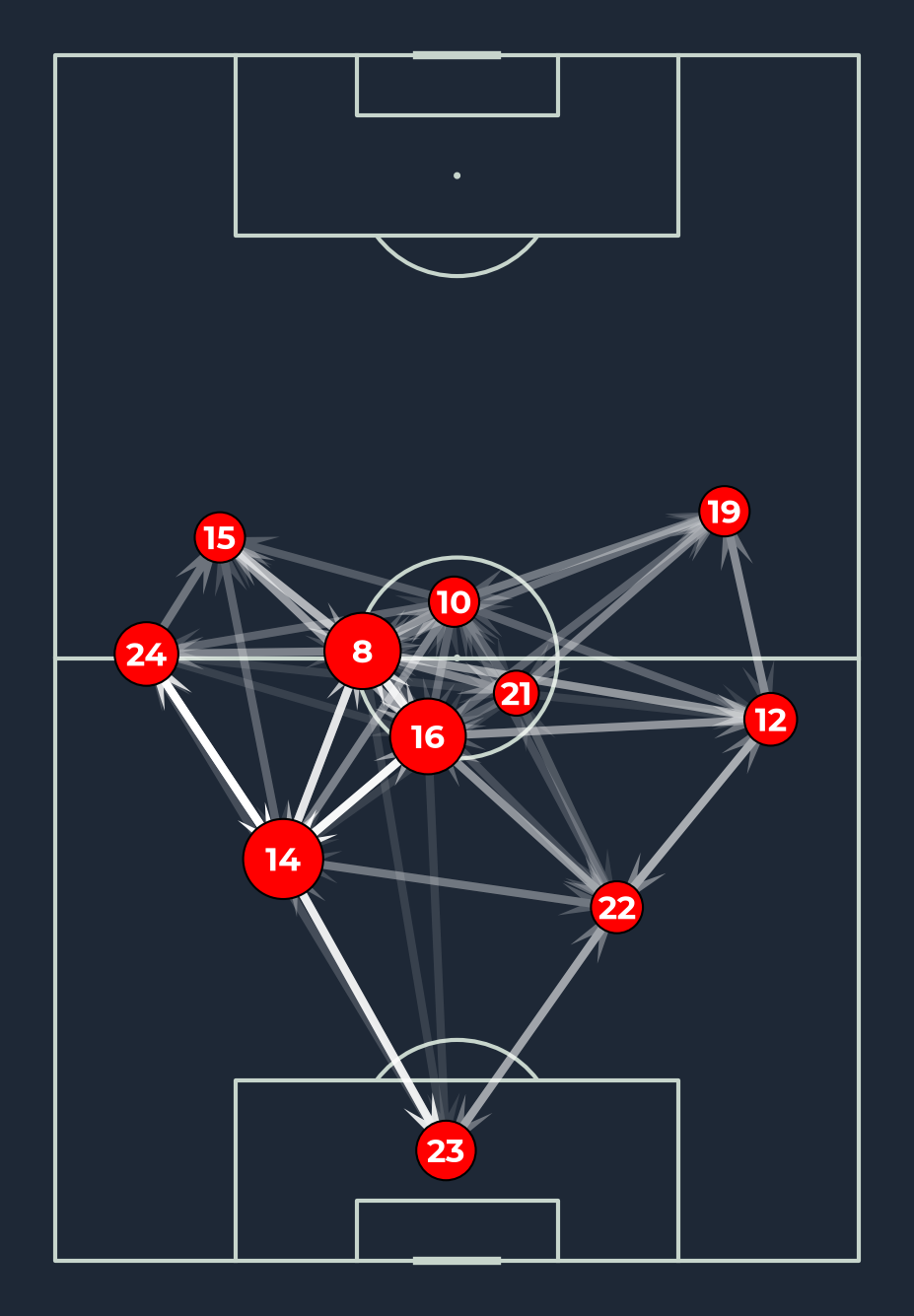
The collective abyss between the two teams is blown wide open when looking at the passing networks. The Spanish web shows perfect gearing in the midfield. There are very strong and dense connections between the men at the back, such as Aymeric Laporte (14), and the central core (numbers 16 and 8, Rodri and Fabián Ruiz, respectively), who dictated the tempo and found the wingers (like the 19, Yamal) with ease.
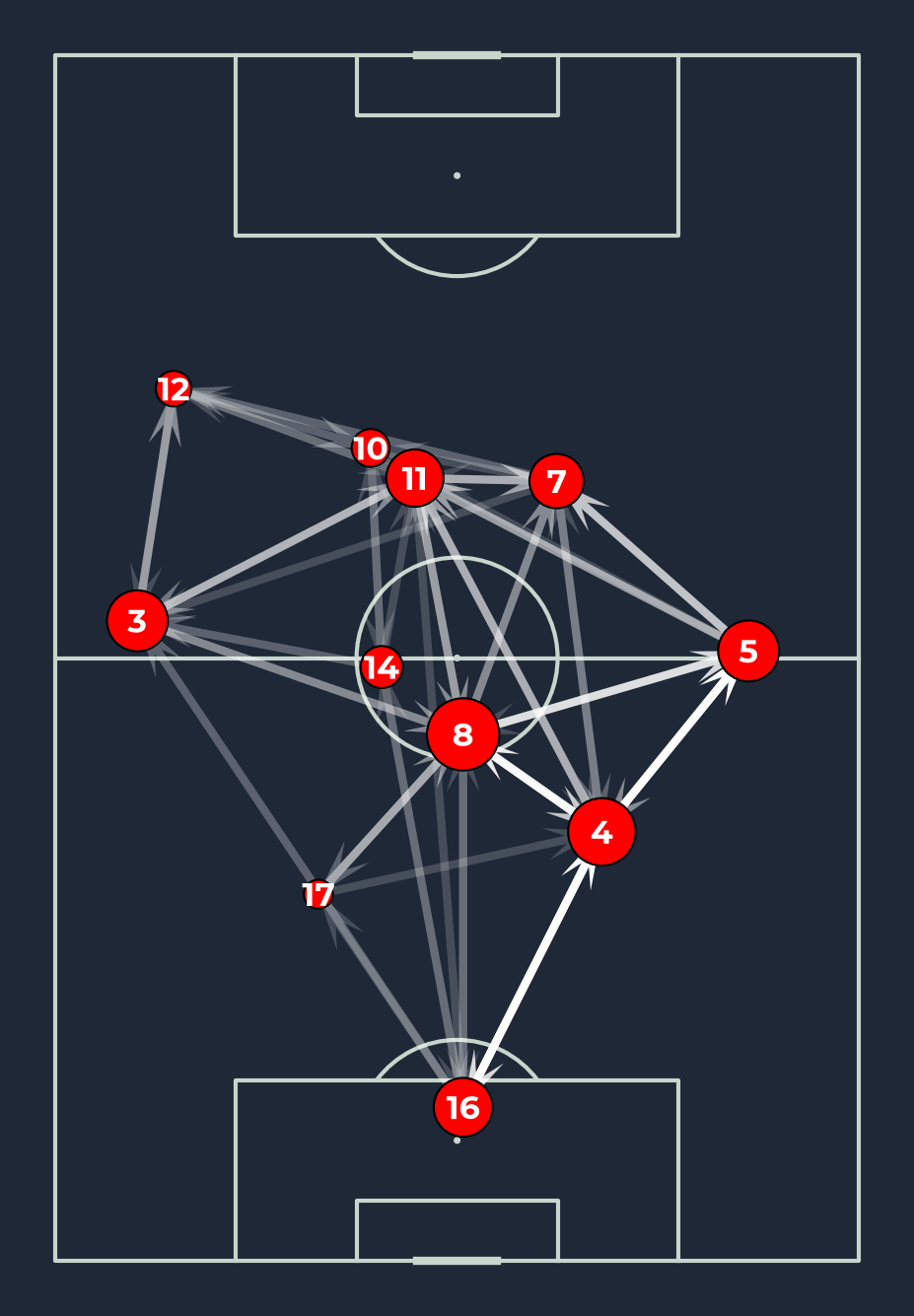
France’s passing network, on the other hand, is the portrait of a broken team. There is a very strong passing “triangle” only in the defense (between goalkeeper Mike Maignan, number 16, and defenders/midfielders Upamecano and Tchouaméni, pieces 4 and 8, respectively). But when we look forward, the lines connecting the midfield to the attackers (Mbappé [10], Barcola [12], and Dembélé [7]) are extremely thin or nonexistent. The front men played completely isolated.
This isolation generated a harmful dependence on individual plays. When these talents were not having a good day — like Olise, who misplaced several passes and performed below expectations — France lacked alternative solutions. A play at the 36th minute summarized this lack of inspiration: after a long ball to Mbappé, Unai Simón rushed out of the box and cleared it. The rebound fell to Doué, who, instead of attempting a chip shot with the goalkeeper out of his goal, risked a low long-range shot, making it an easy save for Simón.
Conclusion
The final whistle confirmed that tactical organization and strong collective play overcome a simple cluster of star players. Spain built their victory unquestionably, functioning as a cohesive unit where movements, midfield control, and well-timed tackles dictated the rhythm of their qualification. The team strengthens significantly for the decisive stages.
For France, the elimination leaves scars. Didier Deschamps’ squad was extremely passive, displayed harmless ball possession, and relied excessively on the brilliance of their attackers. Without tactical connections in the midfield to deliver clean balls up front, France bids farewell to the tournament lackluster and devoid of solutions.
Analysis: England vs Argentina
Introduction
The World Cup semi-final clash between England and Argentina was a true test of nerves, tactics, and above all, resilience. In yet another spectacular comeback by the South American team, Argentina booked their ticket to the final, driven by a stellar performance from Lionel Messi. The storyline of the match, however, was dictated not only by individual talent but by the drastic shifts in approach from both teams during regular time.
To kick off the duel, both national teams took to the pitch with their strongest lineups. England set up their structure relying on standout players like Harry Kane centrally, supported in creation by Bellingham, Gordon, and Rogers, alongside a solid defensive base protected by Declan Rice in the midfield. Argentina, in turn, responded with a highly technical, possession-based midfield, fielding Enzo Fernández, Paredes, and Mac Allister. This formation provided the ideal platform for captain Lionel Messi to roam freely on the right and link up with Julián Álvarez leading the attack.
Messi's Impact and Spence's Performance
From the starting whistle, Argentina’s flow of the game heavily ran through Messi’s feet, demanding extra attention from the English defense.
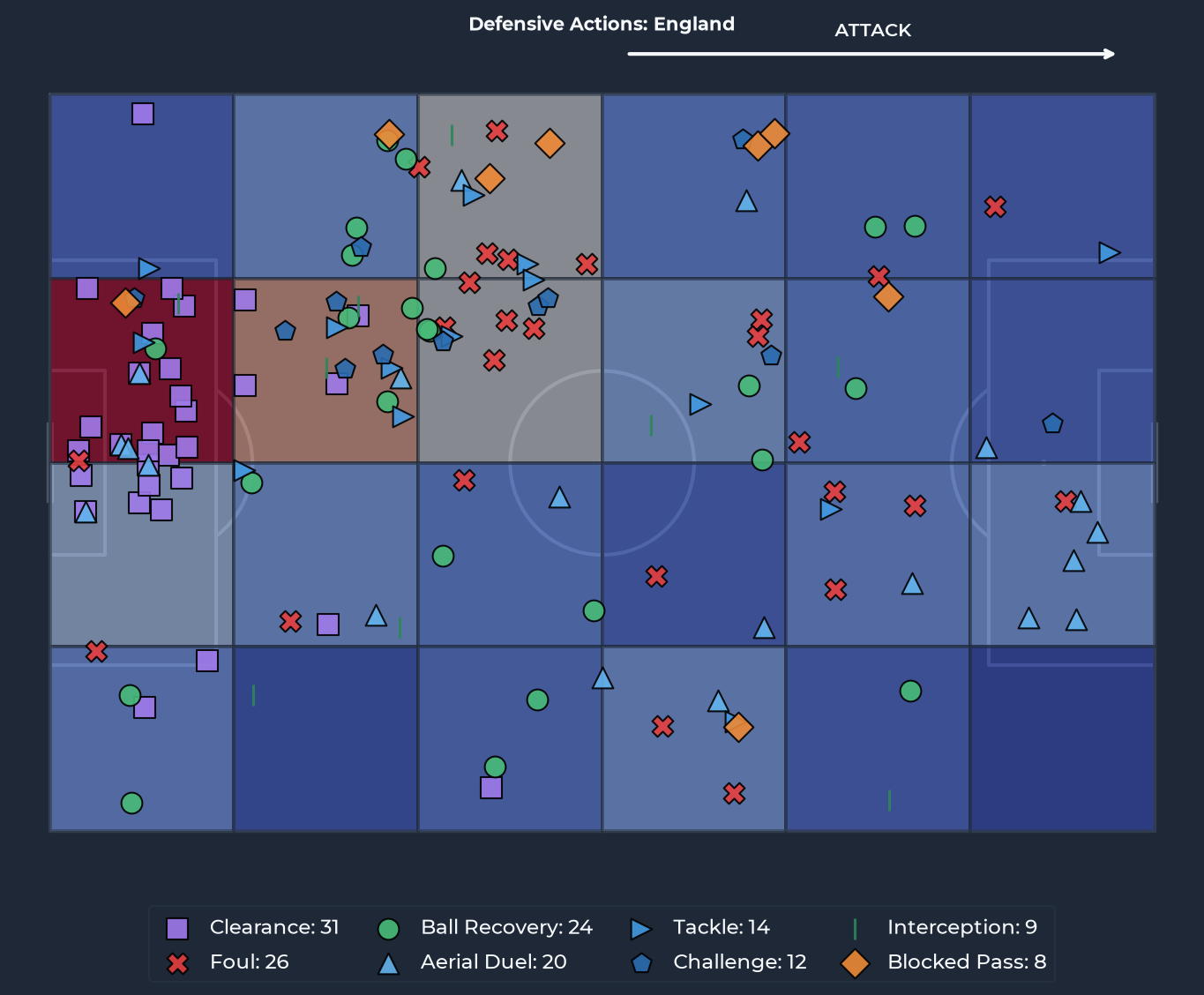
As we can observe in Figure 1, England’s defensive actions map reveals a glaring asymmetry. There is a very high concentration of tackles, fouls, interceptions, and clearances on the left side of the English defense. This sector was the combat zone fought between Lionel Messi and D. Spence. Despite the constant pressure, the English left-back played an excellent match, starring in the various defensive actions needed to contain the surges of the Argentine number 10 and the right side of the South American attack in general.
The Tactical Turnaround: From Equilibrium to Siege
The duel remained balanced until the moment England managed to open the scoring. From that instant on, the game changed complexion: the European squad completely abandoned offensive actions and adopted an extremely conservative posture, dropping all their lines back to protect the lead.
The message that the team would only try to hold onto the result became evident through the substitutions made by the English coaching staff. Before conceding the first Argentine goal, England withdrew crucial pieces for transition, build-up, and offense — such as Gordon, Rice, and Reece James — bringing on players with a much more defensive profile: Konsa, O’Reilly, and Dan Burn. By removing their attacking outlet and ball retention in the midfield, England invited Argentina into their half, turning the remainder of the match into a constant “attack versus defense.”
Contrast in Possession and Game Control
The difference in mentality after the first goal becomes clear when analyzing each team’s passing networks.
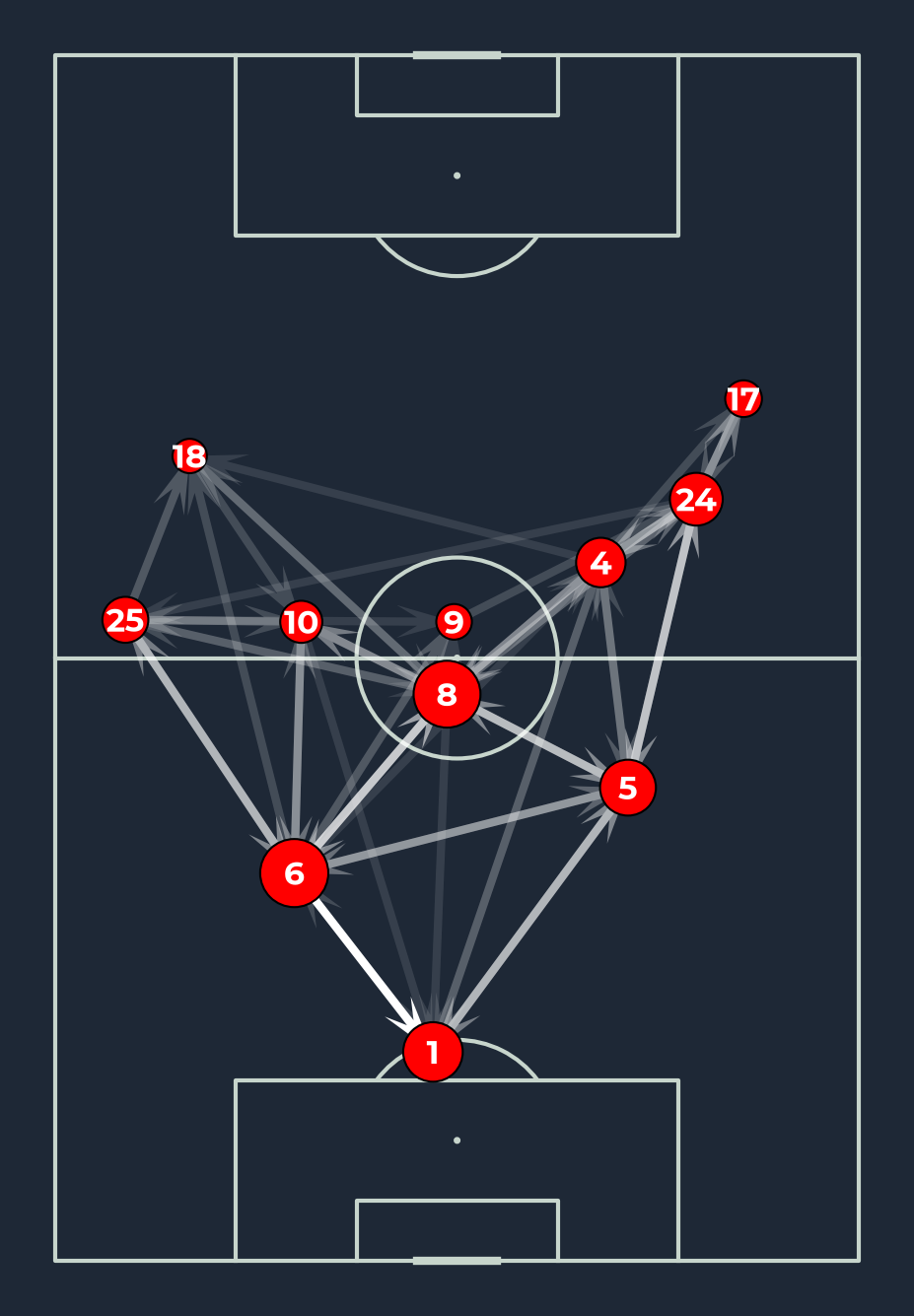
Figure 2 illustrates England’s passing network, which became sparse, with a low volume of interactions and almost no consistent connection in the midfield and attack. It is the true portrait of a team that limited itself to clearing the danger.
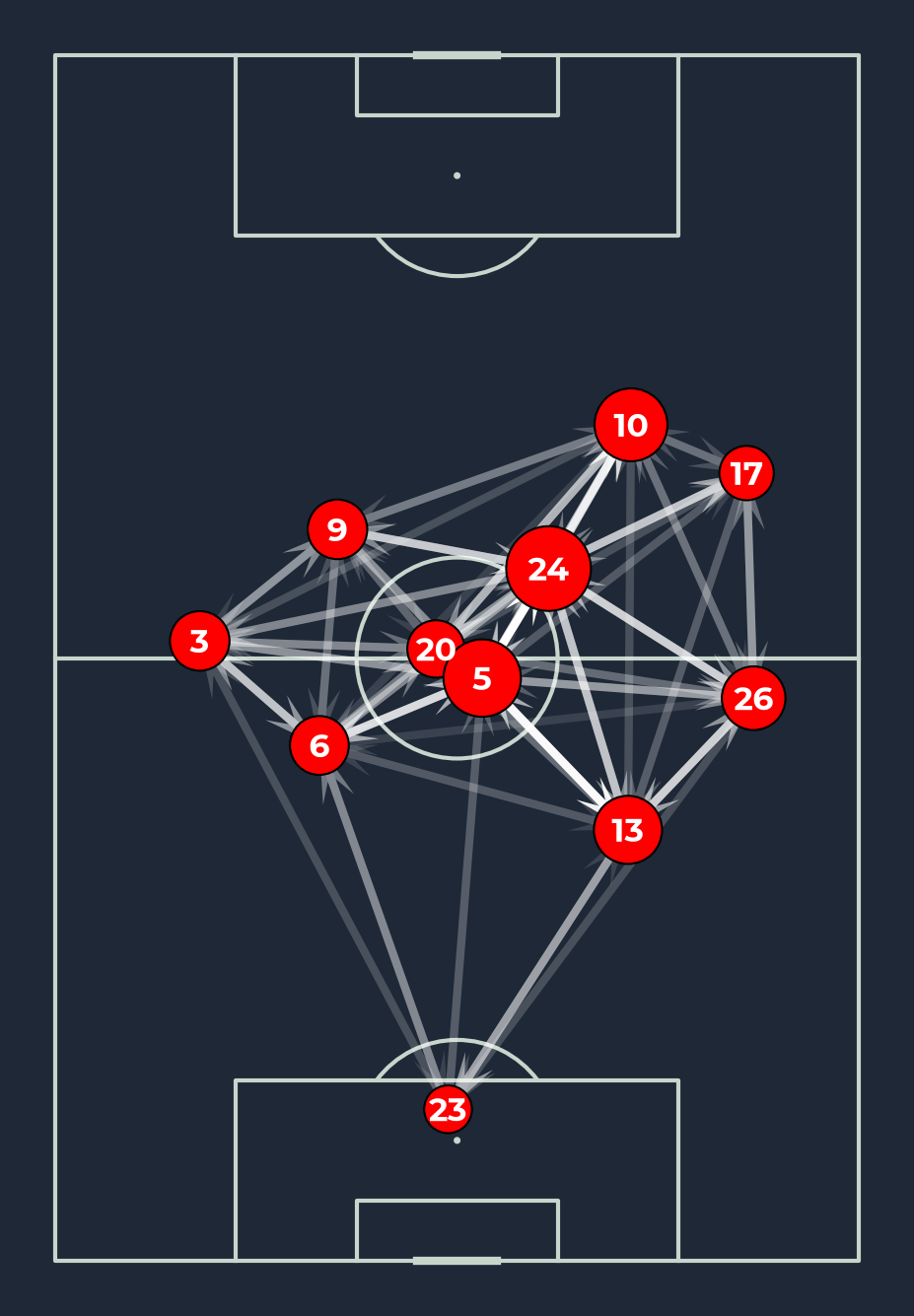
On the other hand, Figure 3 highlights an extremely dense, connected, and voluminous Argentine passing network. With the patience to circulate the ball, the South American team passed around the English box, exhausting the defenders while probing for openings.
The Comeback
The Argentine bombardment, which lasted almost the entire second half, finally found a way through in the 85th minute, with a beautiful equalizing goal from Enzo Fernández from outside the box, rewarding their persistence even after so many minutes of attacking without scoring. The final blow came shortly after, in the 92nd minute, in a play that punished Thomas Tuchel’s team for their strategy of abandoning the game.
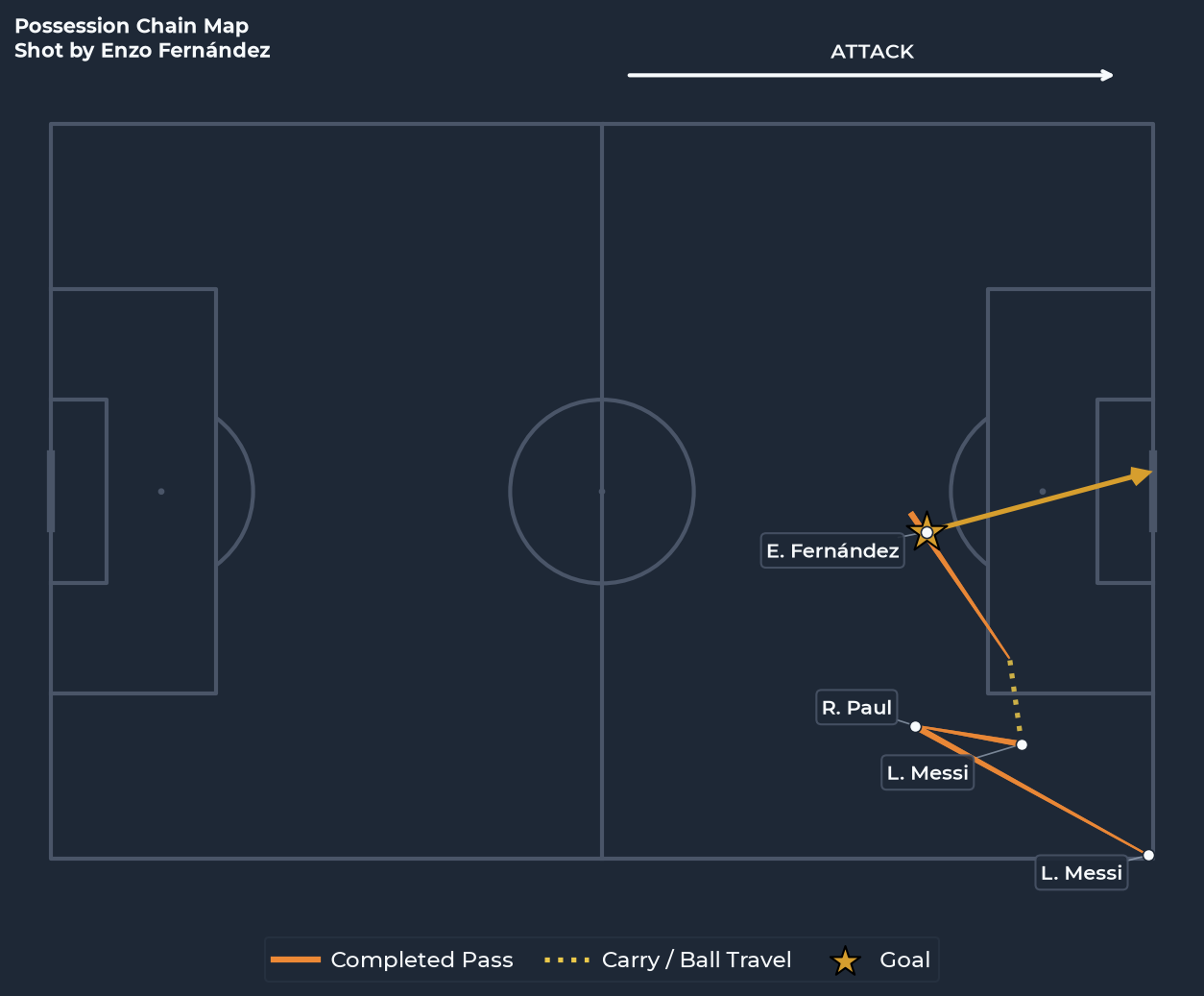
Only after suffering the comeback did England, in desperation, seek to regain possession in the attacking half, but it was already too late: Argentina had consolidated their dominance.
Conclusion
Argentina’s latest comeback crowns the national team that had the courage to take the initiative. England paid the price for their excessive conservatism; the defensive substitutions signaled a fear that invited their opponent forward. With Messi orchestrating the attack and absolute control after conceding the first goal, Argentina advances, proving that retreating early against a highly capable opponent is often the fastest path to elimination.
Enjoy Reading This Article?
Here are some more articles you might like to read next: