Analysis: Argentina x Egypt and Switzerland x Colombia - 2026 World Cup
Se quiser ler este texto em pt-br, clique aqui.
Analysis: Argentina 3-2 Egypt — 2026 World Cup
Introduction
In a clash marked by an evident contrast in tactical approaches, Argentina secured their spot in the quarter-finals by beating Egypt 3-2 in a comeback victory. The match demanded mental resilience and adaptability from the South American squad to overcome a well-structured defensive opponent.
In the starting lineups and tactical stance, Argentina maintained their characteristic pattern from recent games: a 4-1-3-2, deploying Messi and Julián Álvarez in the attack. Egypt, on the other hand, took the pitch focused on neutralizing Argentina’s strengths. The African team set up in a 4-2-3-1, designed to congest the edge of the box and hinder any central infiltration.
Match Summary and Tactical Analysis
First Half: The Egyptian Low Block and Slow Possession
The game began with slight territorial dominance from Egypt in the opening minutes, but the expected tactical layout soon took over. Egypt’s main strategy off the ball consisted of a highly compact back five. However, this line wasn’t static: it shifted into a back four whenever Argentina tried to attack down the flanks, with one of the defenders stepping out to press the ball carrier. The central objective was to force the play out wide and completely shut down the middle.
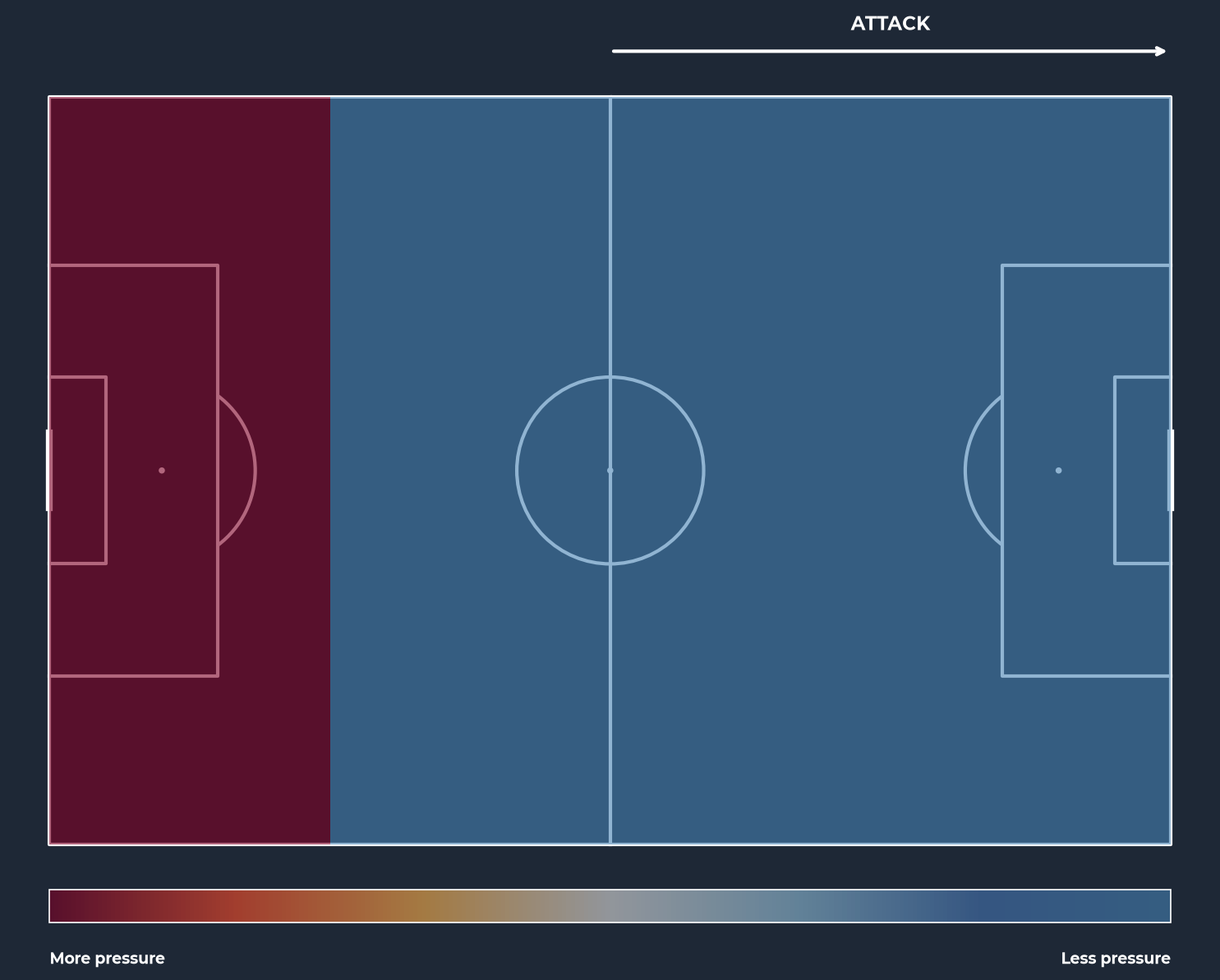
Egypt’s PPDA (Passes Per Defensive Action) map perfectly illustrates this approach. The team completely abandoned pressing in the attacking half (blue zone) and intensely concentrated their physical combat solely in their own defensive third (dark red zone). It was a deliberate and highly disciplined low block.
Even with possession, Argentina’s attacking transition was excessively slow, making it easy for the opposition defense to stay organized. At the 14-minute mark, the Egyptian strategy was rewarded in attack: Attia delivered a perfect cross for Yasser to head home and open the scoring. Argentina had the chance to respond quickly at 20 minutes with a penalty in their favor, but Messi took a poor spot-kick, hitting it at mid-height and allowing the goalkeeper to make the save.
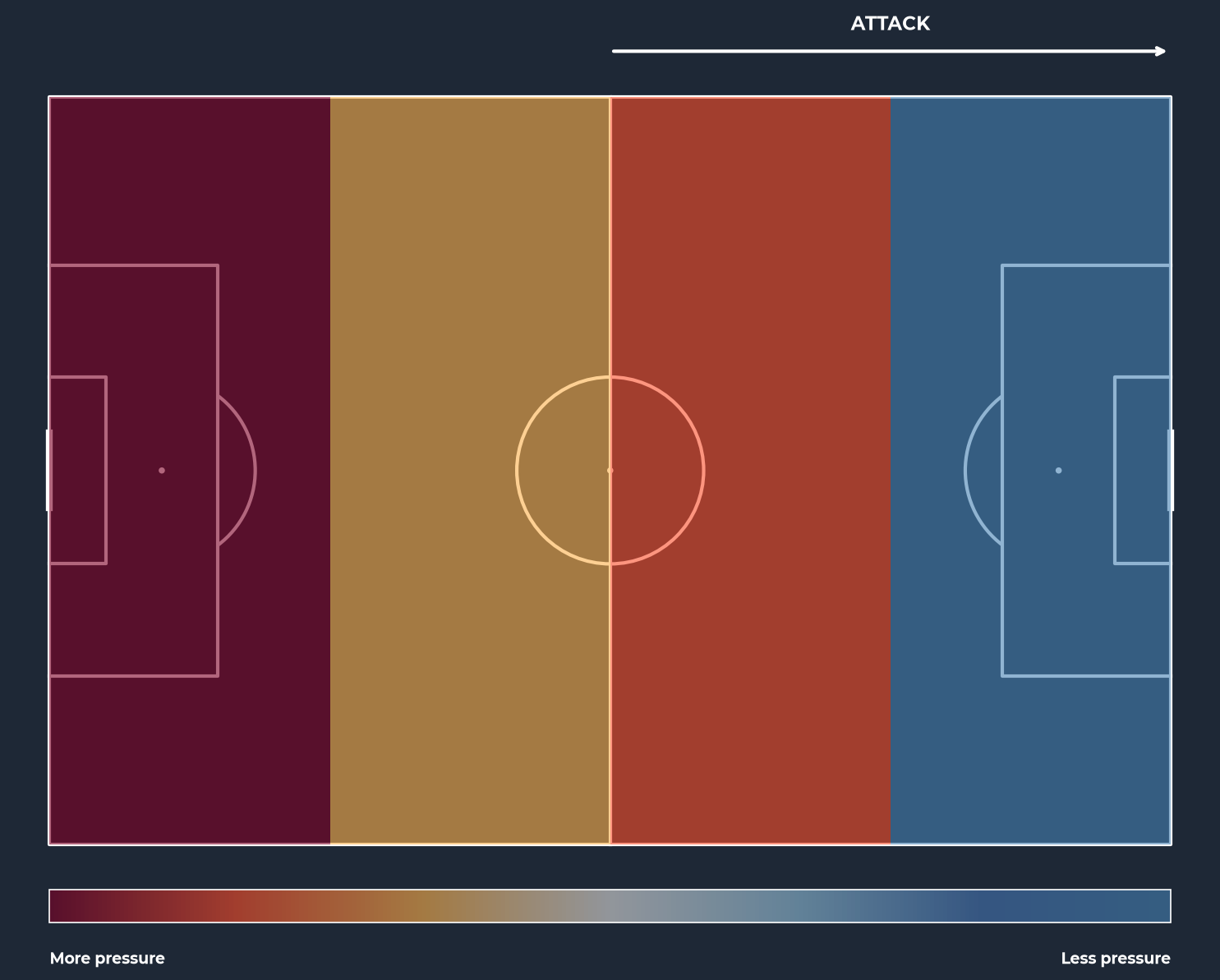
In an attempt to win the ball back quickly and maintain volume, Argentina pushed their lines higher. As shown in their PPDA map, Scaloni’s squad tried to press in the attacking and middle thirds (warm zones) but struggled with a lack of pace to create real chances.
Second Half: Counter-attacks and the Heroic Comeback
Returning from the break, the script seemed the same: Argentina prioritized possession and tried, without much success, to break through the central blockade. The passing networks of both teams clearly expose the match’s dynamic.
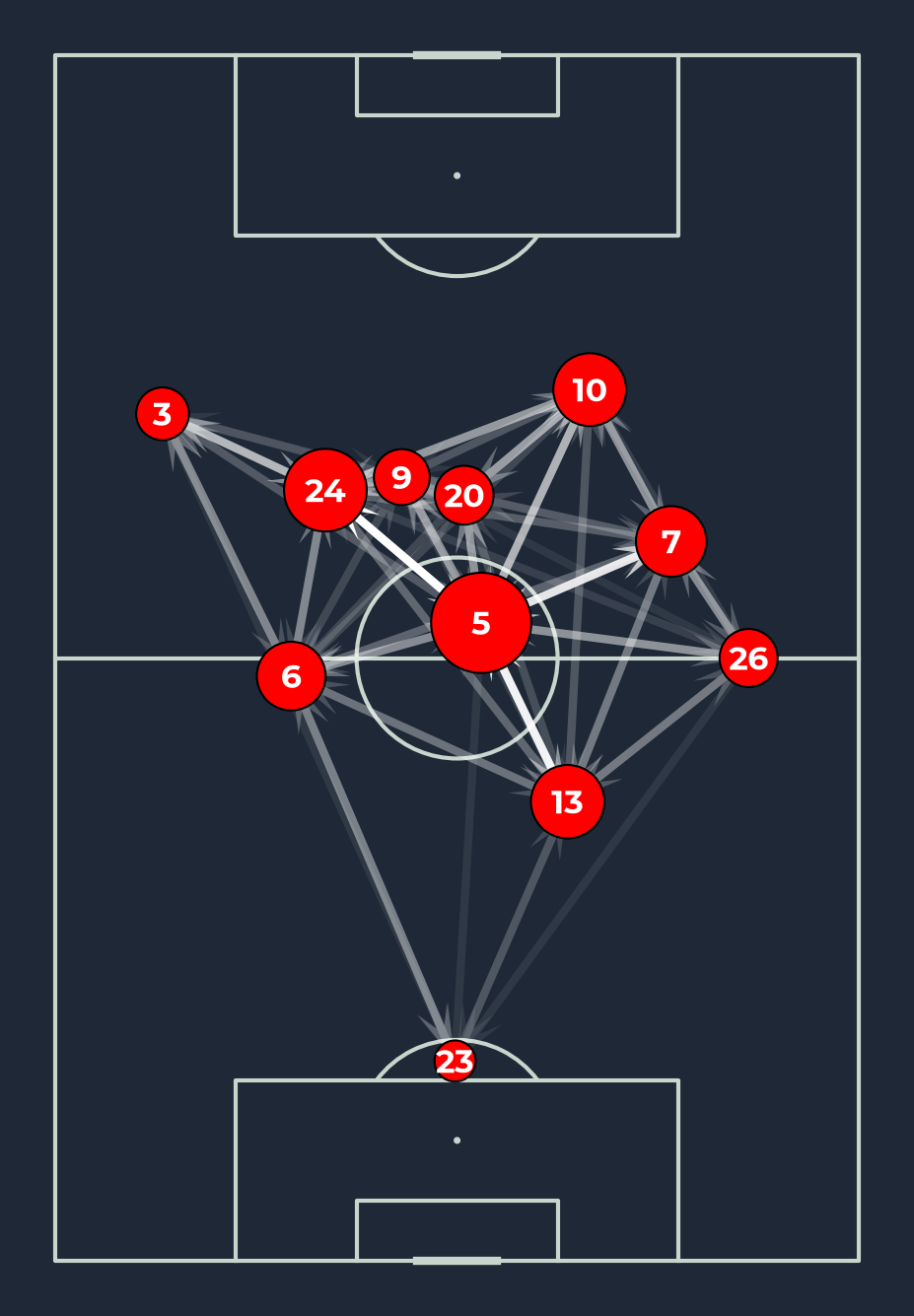
Argentina’s passing network shows a team playing entirely in the opponent’s half. The number 5 (Leandro Paredes) acted as the team’s main playmaker, distributing the play out to the wings and attacking midfielders, but the connections closest to the penalty area (Álvarez (9) and Messi (10)) met heavy resistance from the defenders.
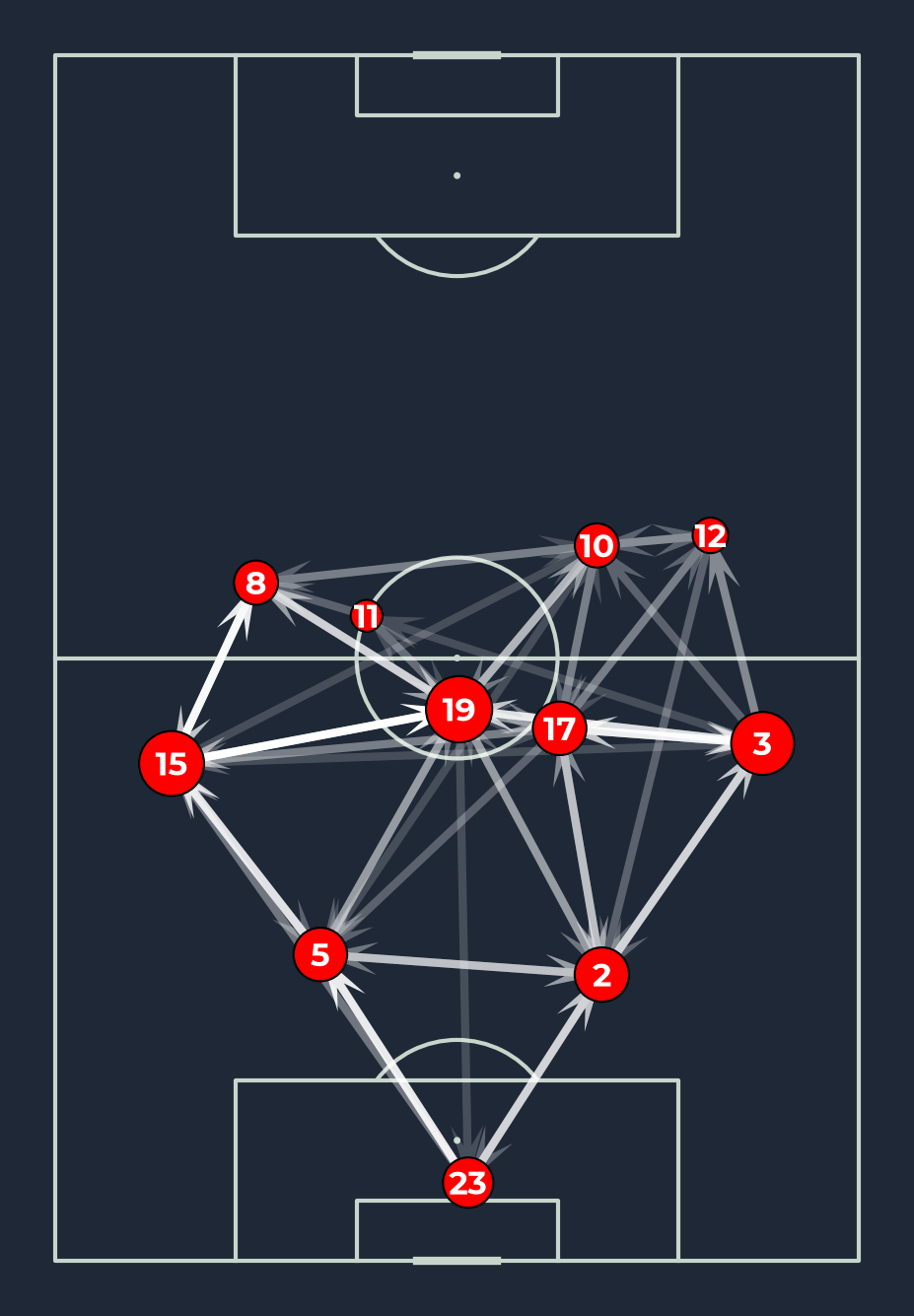
On the other hand, Egypt’s passing network reveals a deep-sitting team with more spaced-out and direct connections, primed to unleash their forwards (Mohamed Salah (10) and Emam Ashour (8)) in quick transitions.
It was through this verticality that Egypt extended their lead. Following a disallowed goal in the 57th minute, the African side launched another counter-attack at the 66-minute mark. Zico made no mistake and scored to make it 2-0.
The situation was critical, but Argentina did not crumble, activating their offensive repertoire in the final stretch. In the 78th minute, the central infiltration finally worked: Messi delivered an exquisite cross for Romero to pull one back with a header.
The pressure continued to suffocate Egypt, and the Argentine national team began to regain its rhythm. Five minutes after their first goal, in the 83rd minute, Lautaro Martínez laid the ball off, finding the team’s star: Lionel Messi. The number 10 unleashed a powerful, high shot to tie the game.
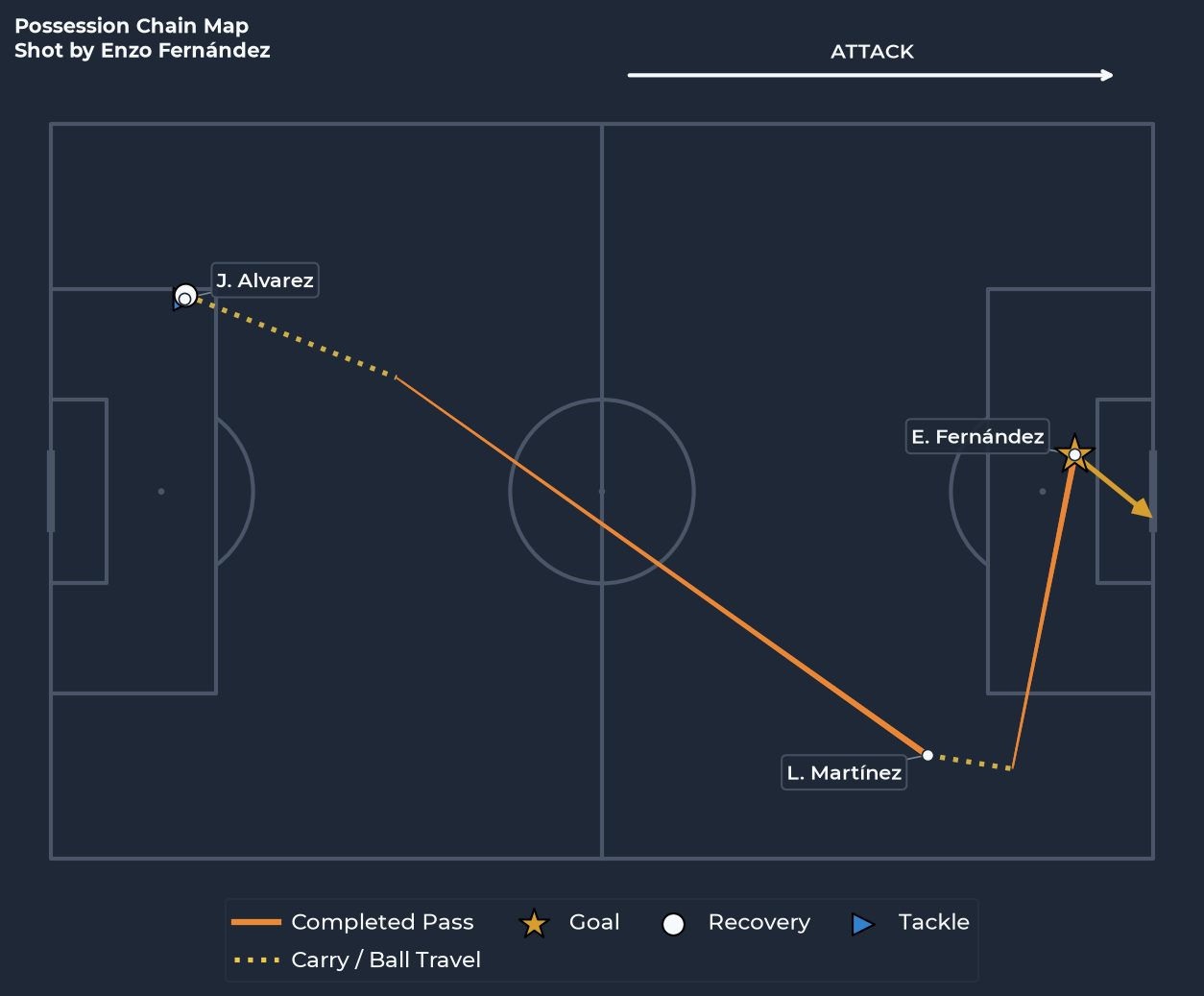
With Egypt exhausted and disorganized from the breaking down of their defensive block, Argentina capitalized on the open spaces. In stoppage time (91’), through a swift counter-attack—a weapon that until then belonged to the opponent—Enzo Fernández sealed the comeback via an aerial ball.
Conclusion
The 3-2 victory is incredible evidence of Argentina’s power of reaction. The team suffered against a highly trained defensive system and paid dearly for their slow passing tempo throughout much of the game, but they had the individual brilliance and persistence needed to dismantle the Egyptian back five in the dying minutes.
Heading into the quarter-finals, there is a clear message: Argentina will need to speed up their attacking transitions. Elite teams defending in a low block might not afford them the same recovery opportunities that Egypt surrendered in the final stretch. For the Egyptians, the elimination is painful, but the squad leaves with their heads held high after executing a tactical plan that nearly toppled one of the title favorites.
Analysis: Switzerland 0-0 Colombia — 2026 World Cup
Introduction
In the final clash of the 2026 World Cup Round of 16, Switzerland and Colombia delivered a highly resilient duel in Vancouver, Canada. The match was decided on penalties, with the Swiss goalkeeper cementing himself as the great hero of the night on North American soil, guiding the Swiss national team to victory.
Regarding the starting lineups, both teams opted for well-balanced formations. Switzerland took the field in a 4-3-3, creating an attacking trio with Dan Ndoye, Breel Embolo, and Fabian Rieder. On the other hand, the Colombian squad chose a more aggressive approach, betting on a 4-1-2-3 with Jefferson Lerma acting as the team’s holding midfielder.
Match Summary and Tactical Analysis
First Half: Long Balls, Xhaka's Control, and Final Third Struggles
The opening minutes laid bare the inherent nerves of a World Cup knockout game: the risk of elimination inhibited any patience in build-up play. Even though this fear didn’t stop the teams from pushing forward, it manifested in the excessive use of long balls and direct play from both sides. This extreme verticality, however, proved fruitless, resulting in short possessions that were easily neutralized by both well-positioned defenses.
After this initial period of chaotic and direct football, Switzerland put the ball on the ground and began to dictate the play. The grand maestro of this tactical shift was the experienced Granit Xhaka. Operating at the base of the midfield, he controlled the tempo and allowed the European side to build from the back with much greater fluidity. The Swiss passing network highlights this, showcasing the number 10 as the team’s primary playmaker.
.png "Switzerland's Passing Network")
Although Xhaka’s orchestration granted Switzerland much better control over possession and the match’s rhythm, this dominance hit a chronic wall in the final third. The team bitterly felt the absence of their young star, Johan Manzambi, who suffered an injury during training and missed the decisive fixture. Without their main creative outlet, his teammates systematically failed in delivering the penultimate passes, turning their territorial dominance into a “pseudo” control, incapable of generating clear-cut chances.
On the other side, the South Americans initially adopted a patient stance against the Swiss spells of possession. Colombia accepted defending in a slightly deeper block, strictly looking to exploit quick transitions upon regaining the ball.
However, around the 15-minute mark, the match’s dynamic underwent a notable inversion. The Colombian side slowed down the pace of their transitions and adopted a much more measured game, exchanging passes for long spells and pushing the Swiss defensive line backward.
.png "Colombia's Passing Network")
This patient and well-structured ball circulation culminated in the best opportunity of the first half. At 21 minutes, following a long sequence of passes, Gustavo Puerta found space in the attacking midfield and unleashed a beautiful strike toward the goal. The shot, which was right on target, demanded a spectacular save from the Swiss goalkeeper, whose sharp reflexes denied the South American goal and began to outline his role as the European side’s savior.
Second Half: The Fear of Making Mistakes
The tone set in the final stretch of the first half dictated the remainder of the match. The game became a mirror of this alternating behavior: moments where Switzerland controlled the actions through Xhaka’s distribution, followed by spells where Colombia took possession and slowed the game down in search of spaces.
This pendulum dynamic remained until the end of regulation time. The fear of conceding a lethal counter-attack caused both national teams to reduce their offensive aggression. Without much further excitement or clear-cut chances, the defensive systems prevailed over the attacks, steering the clash toward its dramatic conclusion.
Conclusion
The duel in Vancouver highlighted a match where pragmatism, nerves, and tactical organization spoke louder than individual brilliance. Switzerland, feeling the lack of Manzambi’s explosiveness and creativity, had to rely entirely on Xhaka’s conducting and, above all, the flawless security of their goalkeeper to hold off the Colombian push.
On the flip side, Colombia demonstrated extreme maturity in reading the moments of the game, alternating between fast transitions and methodical possession, but faltered when it came to finishing their plays. The draw in regulation time made it clear that, at the highest level of world football, the finer details and defensive resilience are the factors that separate teams from ultimate glory or elimination.
Enjoy Reading This Article?
Here are some more articles you might like to read next: