Analysis: Brazil 2x1 Japan - World Cup 2026
Se quiser ler este texto em pt-br, clique aqui.
Introduction
In a clash that tested the fans’ nerves from start to finish, the Brazilian National Team staged a dramatic last-minute victory against Japan. Brazil overcame its own inconsistencies to defeat an extremely organized and disciplined opponent with the final score of 2-1.
The result guarantees the survival and advancement of the Seleção to the knockout stage of the World Cup. More than just qualification, the victory cements the mental resilience of the squad in a scenario of extreme pressure and tactical frustration, serving as a fundamental confidence boost for the upcoming challenges in the competition.
The duel showcased a strong clash of styles right from the starting lineups. Brazil took the field structured in a 4-1-2-3 with the usual variation to a 4-2-4 in the offensive phase and a 4-4-2 in defensive transition. On the other side, Japan presented a 3-4-3 on paper, but in practice, this translated into an extremely compact, very low block, forming lines of 5 and 4 defenders to deny the center of the pitch to Carlo Ancelotti’s team.
Match Summary and Tactical Analysis
First Half: Illusory control and the punishment of the low block
The first half was marked by a “tactical trap” designed by Japan. Brazil tried to impose its traditional high press in the opening minutes, aiming to disrupt the opponent’s build-up play and force errors. The Asian team, however, wasn’t ashamed of ceding possession when necessary, and quickly established a defensive posture, waiting for counter-attack opportunities. Although Brazil’s territorial dominance allowed them to reach an impressive 68% possession in the first half, it was an illusory control. The Brazilian team slowly exchanged passes between its center-backs and defensive midfielders, struggling to find any space in the congested midfield. Meanwhile, whenever the Japanese recovered possession, they managed to bypass Brazil’s first line of defense with quick, vertical passing combinations.
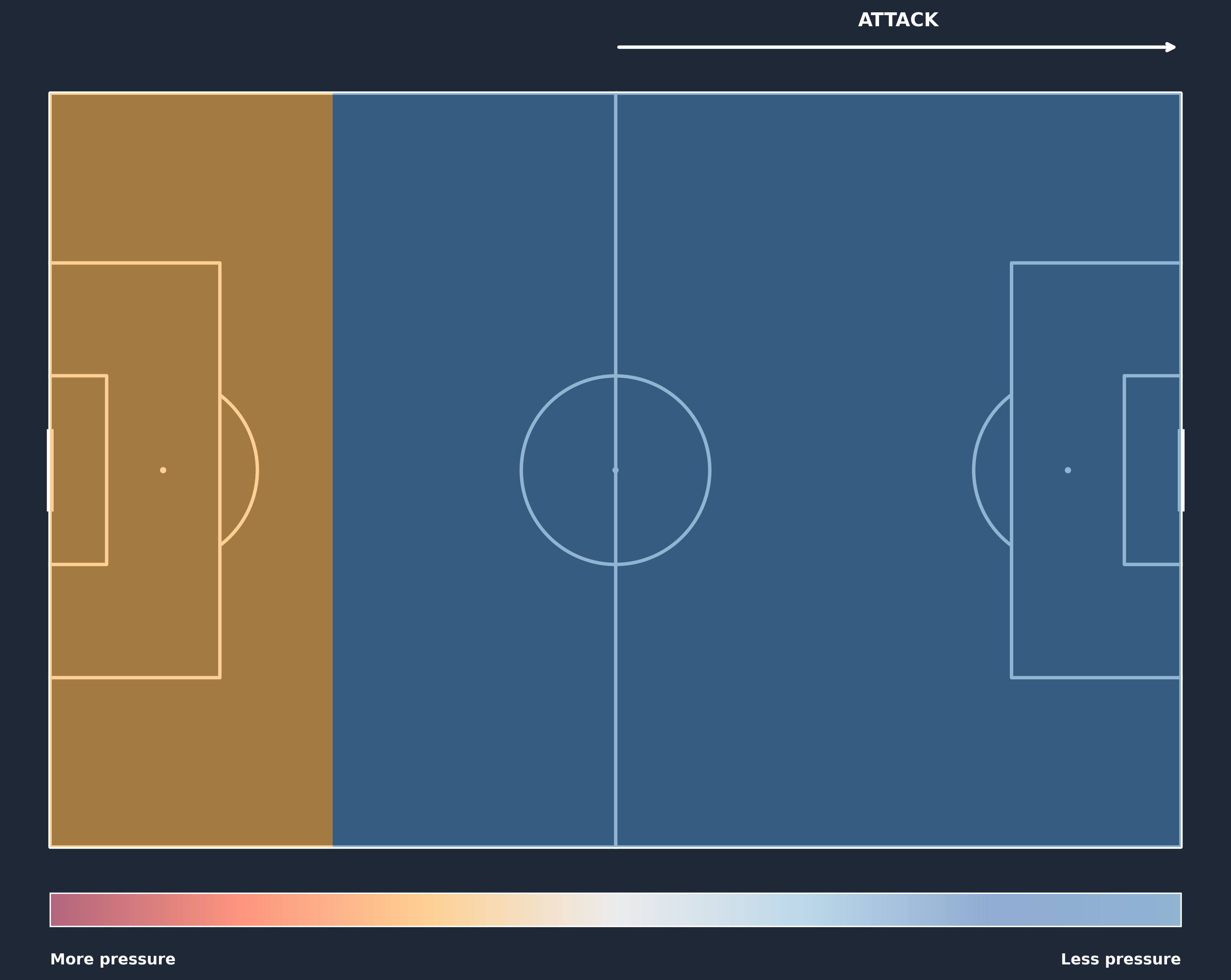
Japan’s ultra-defensive posture becomes evident when analyzing their PPDA (Passes Per Defensive Action) map. The team completely gave up pressing Brazil’s build-up, concentrating their defensive pressure massively only in their own final third. This created a very solid “wall” at the edge of the box, forcing Brazil into a peripheral and ineffective game.
The punishment for Brazil’s sterile volume of play and lack of creativity came at the 28th minute, exploiting precisely a flaw in the defensive transition. Danilo forced an infield pass, looking to break the lines, but the ball was intercepted, sparking a lethal counter-attack. Casemiro, who was already on a yellow card, couldn’t keep up with the fast transition of the Japanese midfielders, allowing Sano to shoot freely from outside the box. The blow was felt immediately: Japan took psychological control of the match, slowed down the pace, started exchanging more passes, and ended the first half as the “tactical winner” of the clash.
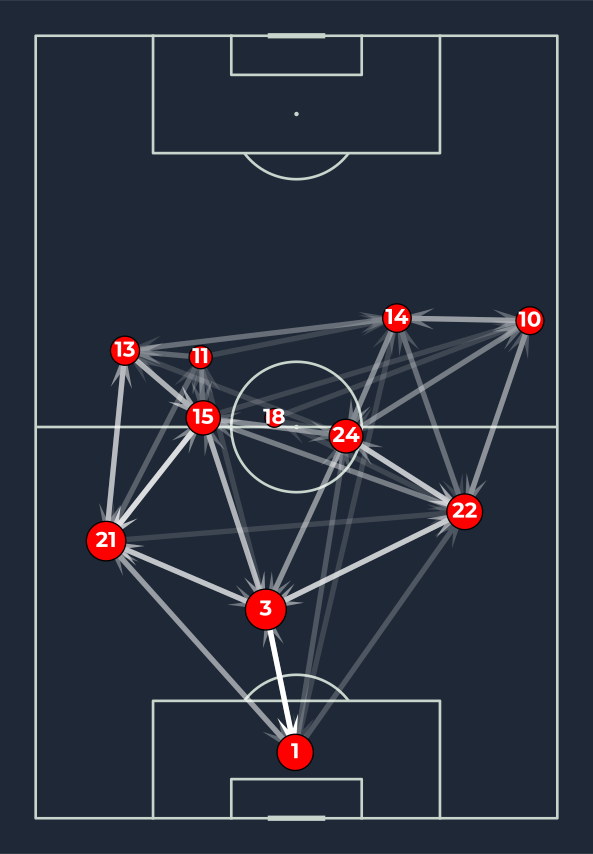
In the Japanese passing network, the connections further highlight the solid structure of the team, which maintained a defensive formation with short, compact lines after opening the scoring against Brazil.
Second Half: Plan B, the aerial game, and redemption at the end
The adverse scenario and offensive inefficiency forced a drastic change of course in the locker room. With the forced substitution of Lucas Paquetá due to injury, Carlo Ancelotti brought in the youngster Endrick and altered the team’s structure to an aggressive 4-2-4, a variation heavily practiced during the pre-World Cup cycle. The great tactical insight of this alteration was the repositioning of Matheus Cunha: the number 9 started helping to track back on the left wing without the ball, but attacked as an authentic second striker inside, floating behind the defensive midfielders. This constant movement fixed the attention of the Japanese defense, created doubt in the marking, and began to destabilize the previously solid structure of five defenders.
The impact of the change was immediate and turned the game into an attack-versus-defense drill. Brazil took control of the match, recording an impressive 11 shots compared to just one from the opponents in the second half. The dynamics of this territorial dominance are evident when reading Brazil’s PPDA map, which shows how the team’s ball recovery functioned. In addition to the high concentration of defensive actions in its defensive quarter, Brazil had a considerable amount of actions in the middle and few actions in the final quarter. This relates to the game’s dynamics: Brazil couldn’t press high for a large part of the game, and the defensive actions in the middle third were precisely ball recoveries after Japan attempted risky passes and long balls to launch a counter-attack.
.png "Brazil's PPDA Map")
With no space for short passing combinations on the ground, Brazil was forced to utilize different resources. The team began using its center-backs and full-backs (especially Magalhães and Danilo) to deliver crosses from intermediate zones, bypassing the central Japanese block.
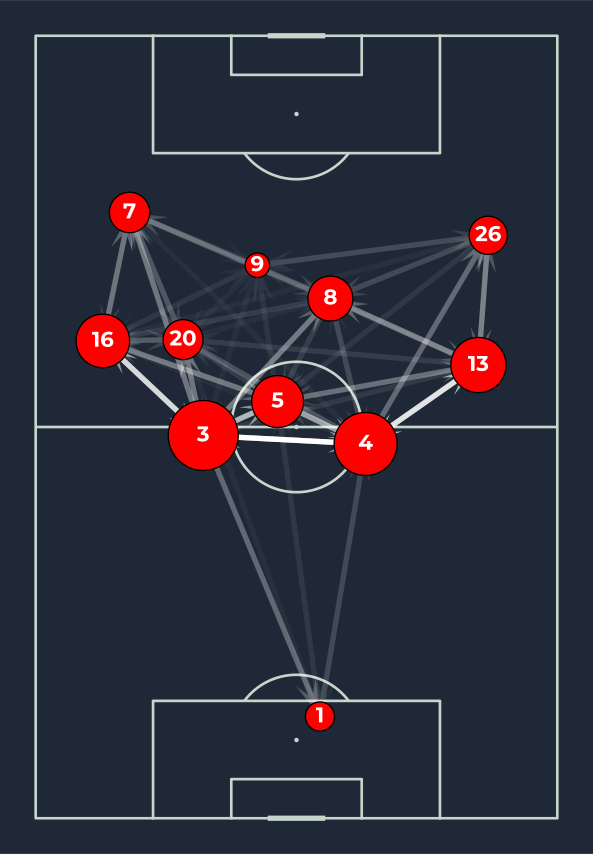
Brazil’s passing network perfectly illustrates this scenario. The graph showcases the team’s biggest offensive problem since the first half: a huge isolation of Vinícius Júnior. Shadowed and suffering constant double-teams, the number 7 appears disconnected on the wing. Without this escape valve, the image shows how the National Team was forced to adopt a passive “U-shaped” ball circulation, looking for alternative routes down the flanks.
The strategy of focusing on the aerial game, aimed at imposing physical superiority in the box, yielded quick results. In the 11th minute (56’), Casemiro found his redemption. The defensive midfielder, who had been having a highly questionable match up to that point, stepped into the box as a surprise element, believed in the play, and equalized the match from a great cross by Gabriel Magalhães. The goal completely shifted the team’s morale. Minutes later, Vinicius Jr. produced a brilliant play: he nearly scored the goal of the tournament by executing a nutmeg on Tomiyasu, dribbling past the Japanese defense inside the box, and shooting, but his finish was met with a miracle save by goalkeeper Suzuki and smashed against the post.
Brazil had volume but was up against the clock and brilliant saves from the opposing goalkeeper. After the cooling break, the Seleção had to revert to the original 4-1-2-3 to reorganize the midfield and contain the dangerous Asian counter-attacks. Well into stoppage time, Casemiro, reporting thigh pain, made way for Fabinho.
The script was fulfilled at the very end of the match, in the 51st minute (96’). Ironically, the high press, which had failed in the first half, was the key to the comeback: Endrick and Rayan pressed the build-up play and forced a fatal error from the Japanese defense. The recovered ball found Bruno Guimarães, who went for Martinelli with a through ball penetrating the opposition box, breaking the final defensive line and leaving the forward one-on-one with the goalkeeper to seal the heroic victory.
Conclusion
Although the last-minute comeback injects a surge of confidence and reinforces the squad’s resilience, the warning sign is flashing for the coaching staff. The match proved that Carlo Ancelotti’s “Plan A” can struggle against defenses structured in organized, low blocks.
Concerns extend to the medical department, which will need to assess the severity of Paquetá’s injury and Casemiro’s thigh pain. On the other hand, the emergence of Bruno Guimarães as the team’s creative engine was the great news of the night. Furthermore, the coach’s ability to make the right decisions and correct the team’s behavior at half-time was tested and approved, serving as a great advantage for the upcoming fixture.
Looking ahead to the remainder of the knockouts, the Brazilian National Team will need to accelerate its tactical evolution. The projected upcoming opponents (Norway or Ivory Coast) promise to offer equally tough and compact defensive systems, but boast even faster and more dangerous individuals to exploit counter-attacks. Brazil advances, but with clear lessons to be corrected if they want to keep the dream of the “hexa” (sixth world title) alive.
Enjoy Reading This Article?
Here are some more articles you might like to read next: