Analysis: Brazil x Norway and Mexico x England - 2026 World Cup
Se quiser ler este texto em pt-br, clique aqui.
Introduction
The Round of 16 of the World Cup culminated in the eliminations of Brazil and Mexico, highlighting significant contrasts in the tactical approaches and on-pitch behavior of both teams. In this post, we will conduct an analysis of the technical and objective aspects of these two matches: the Brazilian National Team’s defeat to Norway’s structured system, and the Mexican team’s match against England’s offensive efficiency. We will examine how the adoption of an excessively reactive strategy compromised the Brazilian advancement in the tournament, whereas Mexico’s proactive stance demonstrated a consistent model of resilience and engagement against a high-level opponent.
Brazil vs. Norway: Reactive Strategy, Lack of Effectiveness, and the End of the Dream for the Hexa
Introduction
In a bitter and premature conclusion, the Brazilian National Team says goodbye to the World Cup after a harsh 2-1 defeat to Norway. In a performance below the expectations of the Brazilian fans, the dream of the long-awaited sixth championship (Hexa) was postponed to 2030. Tactically, the Seleção took the field with Gabriel Martinelli in the starting lineup, an attempt by the coaching staff to maintain the core and offensive dynamics that changed the game’s story in the second half against Japan. On the other side, Norway proved to be an incredibly solid and pragmatic opponent. The Europeans knew how to suffer in critical moments and exploited their physical superiority and tactical patience to decide the match in the final stretch.
Match Summary and Tactical Analysis
First Half: Pressing Triggers and Norwegian Control
The opening minutes of the clash dictated a chaotic rhythm. Both teams took the field trying to impose a suffocating high press on the opponent’s build-up. As a direct consequence of this aggressive stance from both sides, the defenses were forced to resort to direct plays, trying to exploit the generous spaces left behind the high lines. This scenario of extreme verticality resulted in a disallowed goal for Norway early in the game, serving as a maximum alert.
After this scare, Brazil adjusted its stance and started to defend in a mid-low block. The strategy was to attract the Europeans and use very well-defined “pressing triggers” to try and recover the ball and punish them in quick transitions. This dynamic generated the Seleção’s main dangerous plays in the first half and was the origin of the period’s most crucial moment: in a precise tackle in the midfield, Brazil stole the ball and broke away. Matheus Cunha got there ahead of the marker and won a penalty. However, Bruno Guimarães missed the spot-kick.
The execution of this reactive stance becomes evident when we observe the Brazilian National Team’s defensive actions map.
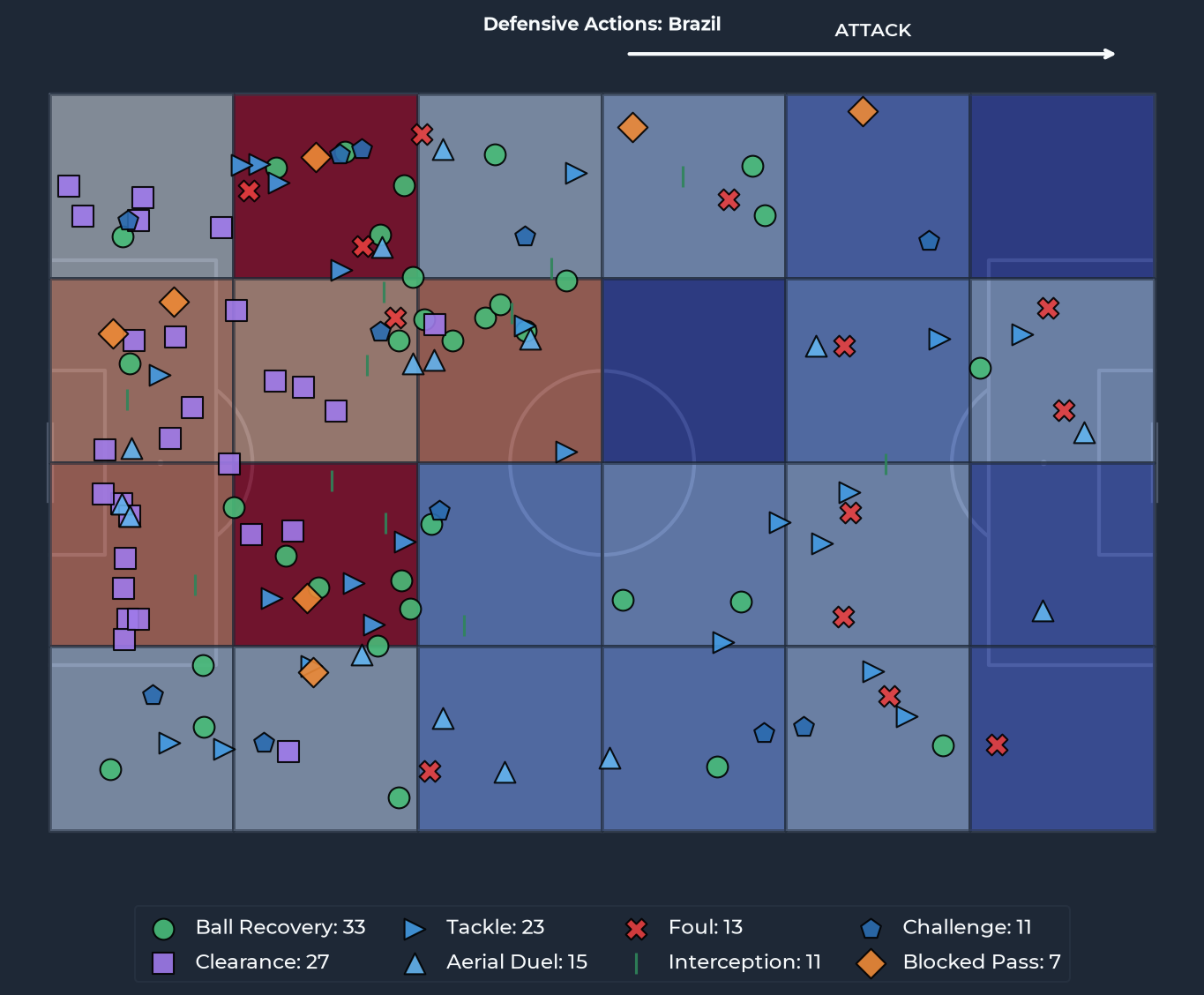
The graphic illustrates a massive concentration of clearances, interceptions, and tackles focused within Brazil’s own defensive third and inside the penalty area. This visual representation proves the reactive tactical choice to shorten the opponent’s spaces close to Alisson’s goal. The reactivity becomes even more noticeable when considering ball possession: 34% for Brazil and 66% for the Norwegians, making it one of the lowest possession percentages historically recorded for Brazil in World Cup matches.
However, this strategy came at a very high price for the team’s articulation. The immense disparity in the control of actions and the quality of possession is evident when comparing the passing networks of both teams.
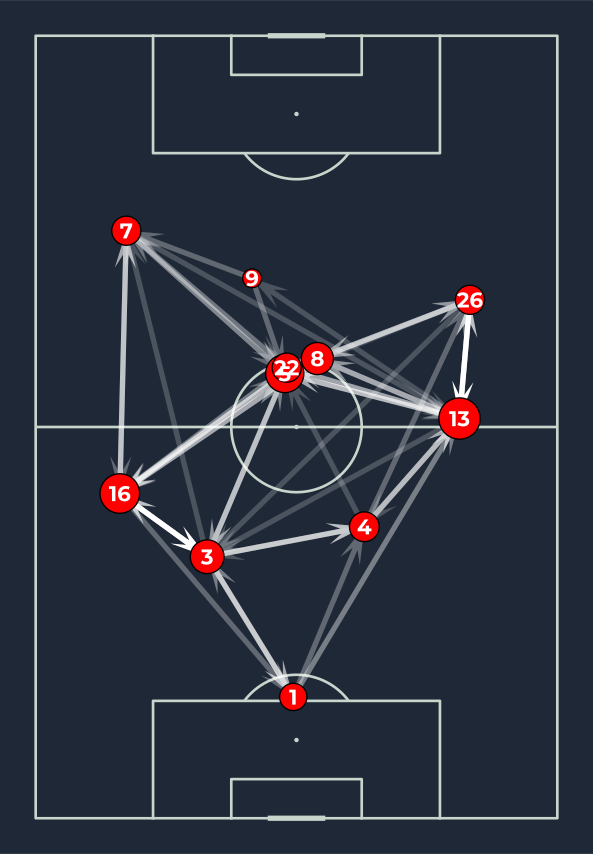
The Brazilian network reflects a team forced to play peripherally, with decentralized connections and enormous difficulty retaining the ball in the midfield. Brazil defended in a low block, focused on cutting off Norway’s main play: the through ball for Erling Haaland in space.
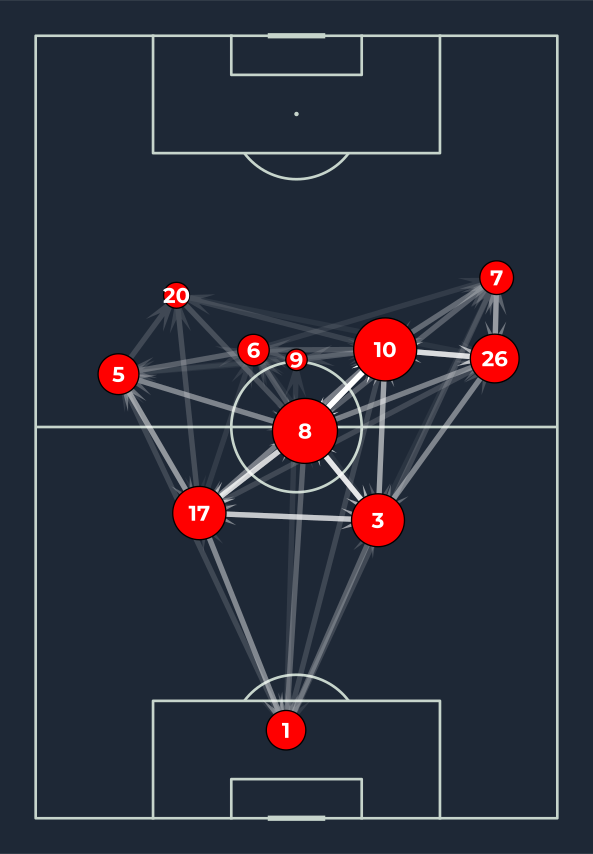
The Norwegian network, on the other hand, illustrates an imposing tactical dominance. Commanded by Sander Berge (8) at the base of the play and Martin Ødegaard (10) orchestrating between the lines, the Europeans dictated the rhythm. With Brazil denying deep space, Norway resorted to direct balls from their own goalkeeper for Haaland to fight for as a target man. Despite being very well marked by the Brazilian defense, the center-forward’s physical strength managed to bring danger at times, especially in a contested ball that culminated in a dangerous finish by Ødegaard.
Second Half: Nyland's Saves, the "Blitz", and the Punishment
The second half resumed at a lukewarm pace, a scenario that lasted until Brazil made its first substitutions. The changes reignited the team, which had its best opportunity in open play after Casemiro stole the ball. The transition play activated Vinícius Júnior, who found Endrick in excellent condition, but the young forward failed to finish the play with precision.
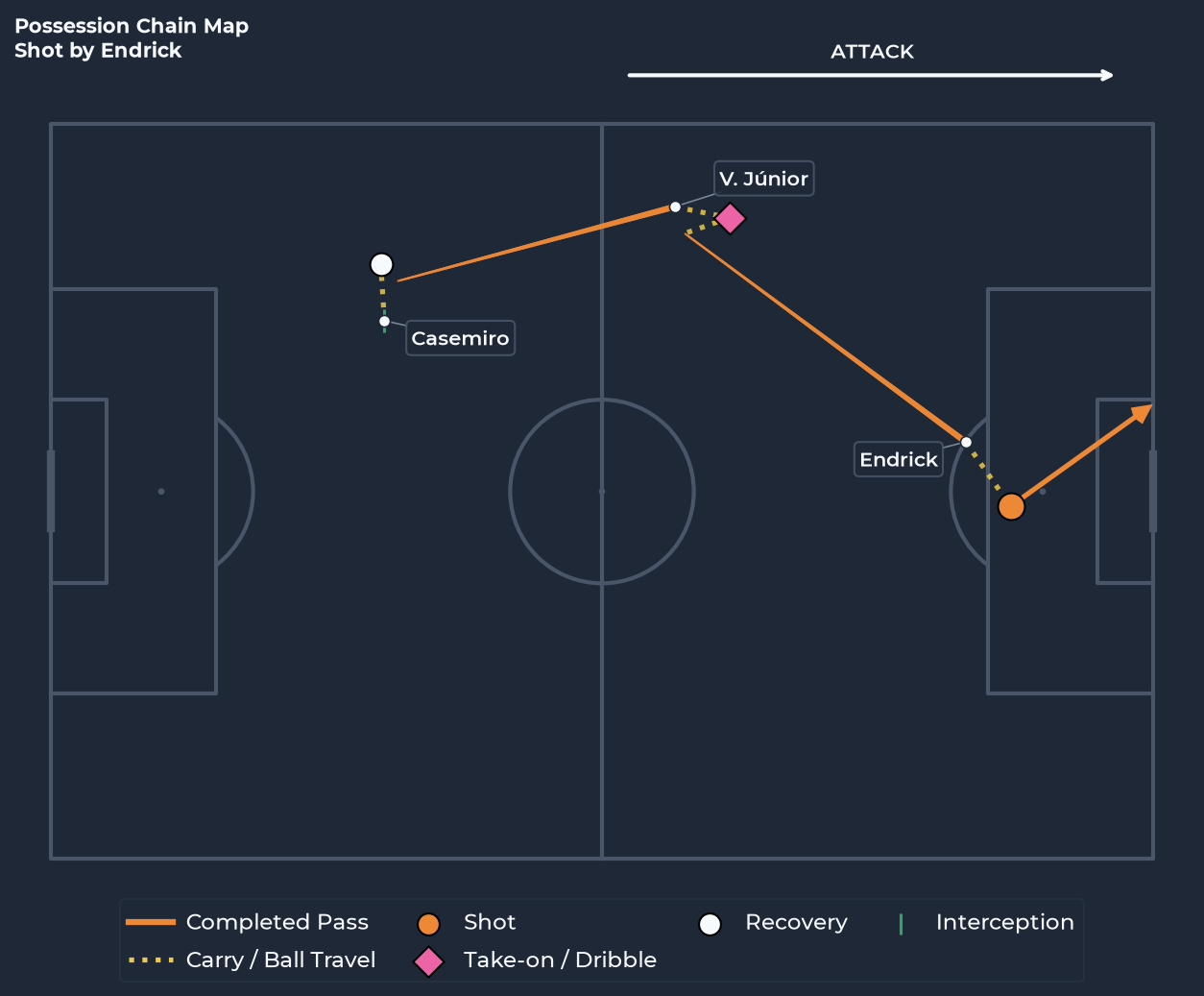
Following this play, Brazil managed to keep possession in the offensive half but ran into a spectacular night from Nyland. The Norwegian goalkeeper worked miracles, making a great save on a shot from outside the box by Rayan (where the ball took a dangerous deflection) and stopping another point-blank shot by Bruno Guimarães, a play that was flagged for offside.
The punishment for the lack of effectiveness arrived around the 20-minute mark, when the Norwegian team pressed Brazil with greater intensity. Exploiting the flanks, the European team arrived twice with extreme danger on crosses aimed at Haaland. On the third attempt, there was no escape.
The build-up of the play highlights the European volume of play, circulating possession until finding the ideal route for the cross. In the box, physical strength and a nose for goal made the difference: Haaland anticipated the ball from Gabriel Magalhães and opened the scoring for the Norwegian national team.
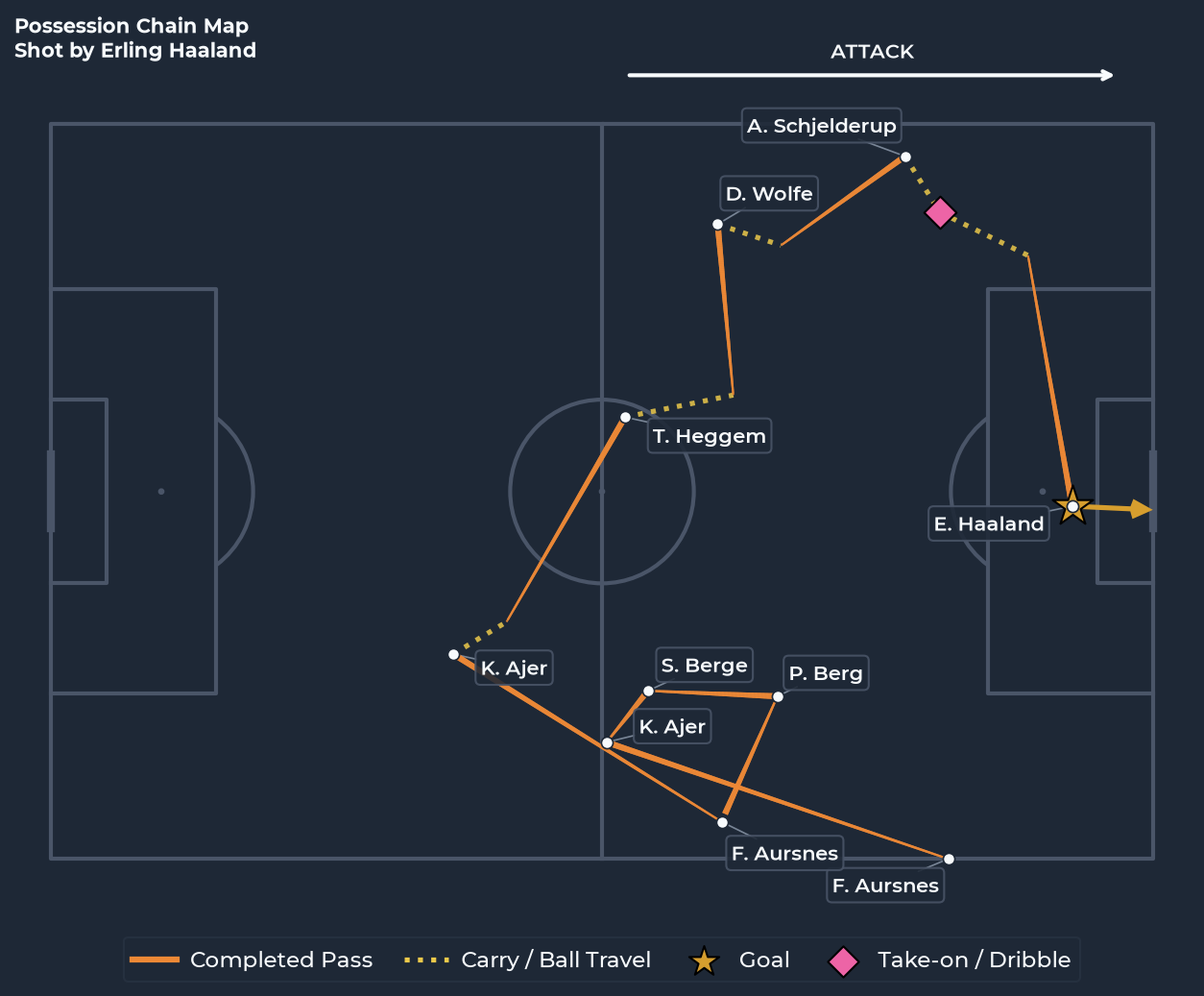
The Brazilian destabilization was evident. Shortly after, in a play inside the box, Brazil almost equalized through what would have been an own goal, prevented by yet another incredible save from goalkeeper Nyland, showing sharp reflexes. The ultimate cold shower occurred in the final minutes. When it seemed like Brazil would manage to stay on the attack longer by pressing Norway, Haaland took advantage of the conceded space and killed the game with a beautiful finish from outside the box.
The Seleção still managed to narrow the scoreline with a penalty converted by Neymar in stoppage time, but there was no time left for anything else.
Conclusion
The premature elimination exposes a Brazil that failed precisely in its effectiveness during critical moments. The reactive strategy of the first half, combined with pressing triggers, worked to create clear chances, but the missed penalty and the major opportunity lost in the final half extracted a very high and unforgivable price at the World Cup level.
On the other side, Norway proved the value of a midfield capable of controlling the actions and a system built to supply the lethality of Erling Haaland. The end of the campaign leaves the harsh lesson that the pragmatism and mental strength of European football continue to be the great tormentor of national football, demanding a profound collective reflection for the next cycle.
Mexico 2x3 England: The Game of the Cup, English Lethality, and a Lesson in Grit
Introduction
In a Round of 16 clash, England defeated Mexico 3-2 and handed the host nation their first defeat in World Cup history inside the Estadio Azteca. Despite the elimination, the home team went down to a standing ovation from their fans after leaving absolutely everything on the pitch.
Tactically, Mexico started in a 4-1-2-3, varying aggressively to a 3-4-3 or even a 3-3-4 in possession, and defending in a 4-4-2. England responded with an initial 4-2-3-1, attacking in a 3-4-3 and setting up a very solid defensive block in a 5-3-2 to contain the hosts’ momentum.
Match Summary and Tactical Analysis
First Half: Mexican Pressure and Bellingham's Composure
The game started with high intensity, marked by a hard foul from Rice just two minutes in. Taking advantage of the Azteca, Mexico imposed a heavy offensive volume, exploiting central penetrations and the aerial game.
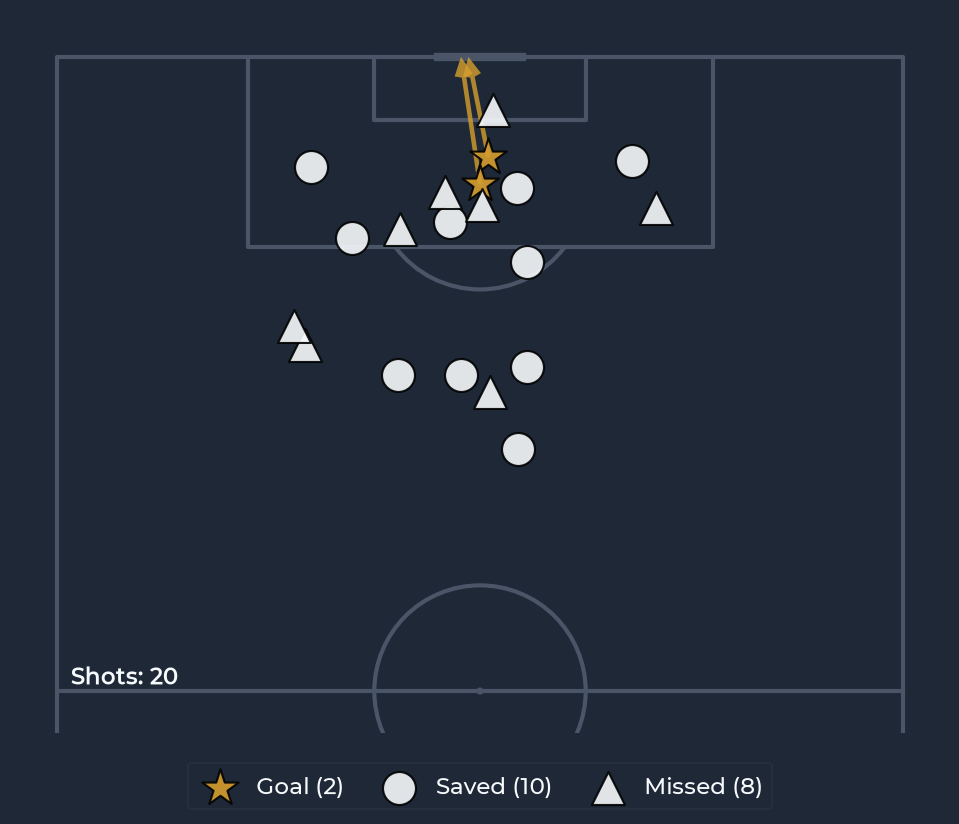
To contain this pressure, Jordan Pickford was decisive. The goalkeeper sustained the scoreline with crucial saves, stopping a header from Raúl Jiménez. The shot map illustrates this volume, showing Mexican attempts in the box neutralized by the goalkeeper and the English defense.
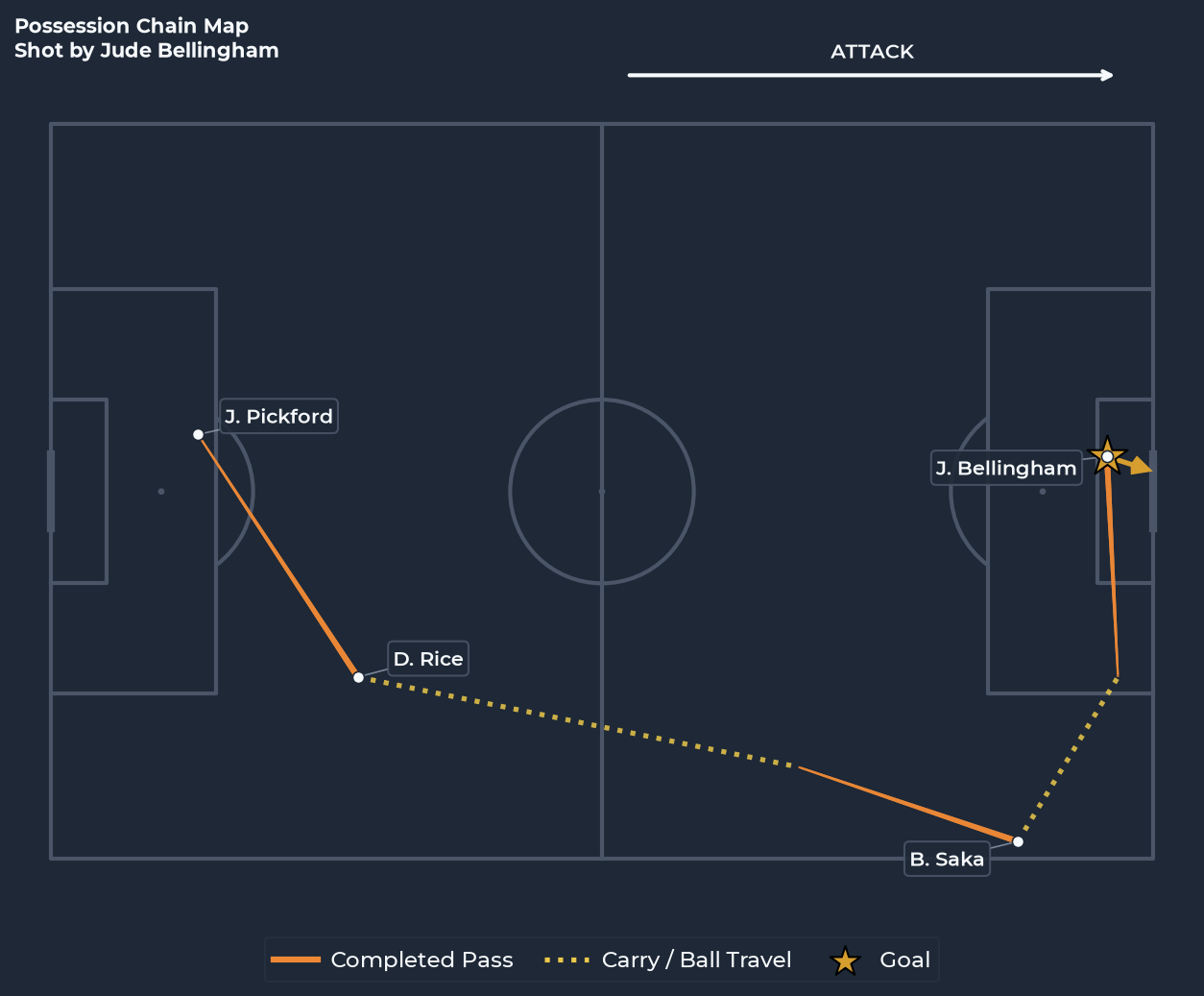
At the height of the rival’s pressure, England proved why they are a powerhouse. With composure, Jude Bellingham scored twice in quick succession: first with a diving header following a cross from Saka on a quick counter-attack, and then by capitalizing on a ball stolen in midfield and a low cross from Harry Kane.
The possession chain for the first English goal reveals the team’s verticality, requiring very little to cross the pitch and punish Mexican aggressiveness on the counter-attack.
Unlike other national teams, the 2-0 deficit did not knock out the hosts. Unfazed by the blow, Mexico kept fighting and, exploiting set-pieces, managed to narrow the gap with Quiñones, who capitalized on a headed knockdown from a teammate following a cross into the box to pull one back.
Second Half: Sending Off, Penalties, and the Final "Blitz"
The final half tested both teams’ resilience. At 53 minutes, the sending-off of center-back Quansah changed the tactical landscape. Mexico pushed forward, but England knew how to exploit the left flank. Down that side, Gordon invaded the box, dribbled past the goalkeeper, and won a penalty, which was powerfully converted by Kane to extend the lead.
A man down, the English dropped back into a defensive 4-4-1. Helping out with the marking, Kane committed a penalty on Gutiérrez inside his own box. Jiménez took the spot-kick, cut the deficit to 3-2 at 67 minutes, and initiated an all-out press.
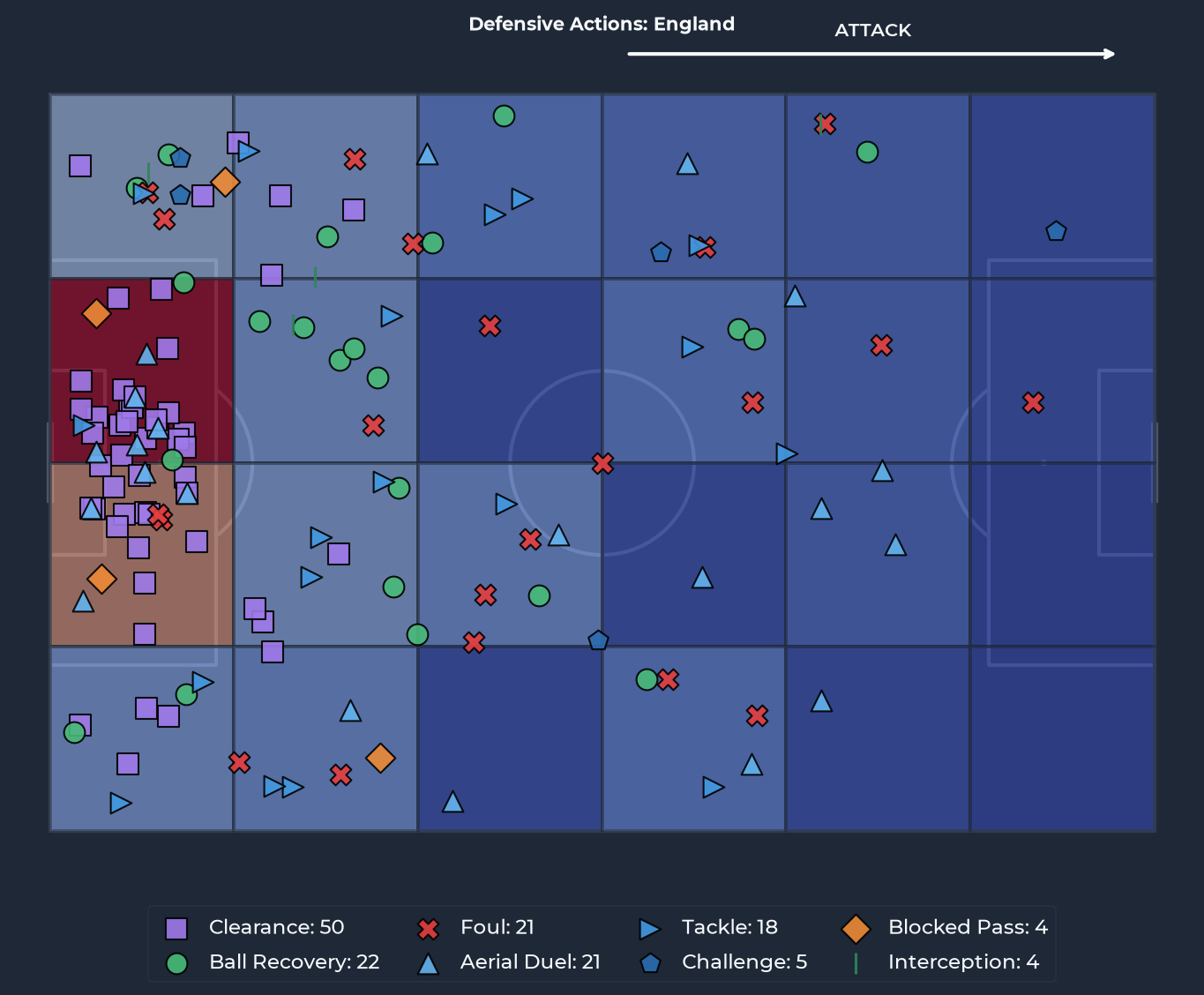
In the 11 minutes of stoppage time, the home team dominated the offensive half. England’s defensive actions map illustrates this survival stance: a massive volume of clearances and interceptions inside the box to secure qualification against the barrage of crosses.
Conclusion: The Contrast of Stances
England advances demonstrating lethality, the ability to withstand pressure, and a goalkeeper having a great night. The main narrative of the match, however, was Mexico’s unyielding stance. Even facing a technically superior team, after falling behind 2-0 and conceding a penalty goal right after gaining a numerical advantage, the team competed until the very end.
This performance serves as a mirror for Brazil’s elimination. While the Mexicans fought intensely for every inch of the pitch, the downfall of Carlo Ancelotti’s team was marked by apathy. The passive stance of the Brazilian National Team, which allowed Norway to exchange passes freely without mounting a reaction, starkly contrasts with the dedication of Mexico, who honored the competition until the final minute.
Enjoy Reading This Article?
Here are some more articles you might like to read next: