Analysis: Canada x Morocco and Paraguay x France - World Cup 2026
Se quiser ler esse texto em pt-br, clique aqui.
Canada x Morocco
Introduction
In this post, we continue our series of World Cup tactical analyses, kicking off our detailed coverage of every match from here until the grand final. Today, we evaluate how strategic efficiency defined two distinct matchups: Morocco’s victory over Canada, built after weathering heavy initial pressure, and France’s triumph against Paraguay, decided by patience against an extremely low defensive block.
In a high-intensity, physically demanding encounter that required tactical patience until the final whistle, the Moroccan National Team secured its qualification with a commanding 3-0 victory over Canada.
Morocco successfully withstood early heavy pressure from a combative opponent, capitalizing on clinical efficiency and the surgical exploitation of space in the second half to build a decisive scoreline. The result guaranteed the African side’s progression to the round of 16, while simultaneously sealing the elimination of the Canadians.
In the starting lineups, Canada set up in a linear 4-4-2 formation (with Johnston, Bombito, Fougerolles, and Laryea anchoring the backline), deploying a high press led by Eustáquio. Morocco responded in a compact 4-2-3-1 system, supported by full-backs Mazraoui and Hakimi alongside the double pivot of El Aynaui and Bouaddi. This structure freed El Khannouss, Ounahi, and Díaz to pull the strings and feed Saibari upfront.
Match Summary and Tactical Analysis
First Half: High-pressing Canada and physical parity
The opening minutes saw a highly aggressive Canada executing a high press deep in the attacking third. This approach suffocated Morocco’s build-up play, forcing the defenders into conceding multiple corners and turning over possession. The Canadian game plan was highly effective during the defensive transition: clinical in their counter-pressing, the North Americans quickly recovered the ball and prevented Morocco from launching organized counter-attacks.
Canada’s PPDA (Passes per Defensive Action) map perfectly illustrates this behavior. A high intensity of pressing and defensive actions is evident in the final third and the advanced midfield zones (indicated by the warmer heat map tones), proving their commitment to a high block designed to stifle the Moroccan build-up.
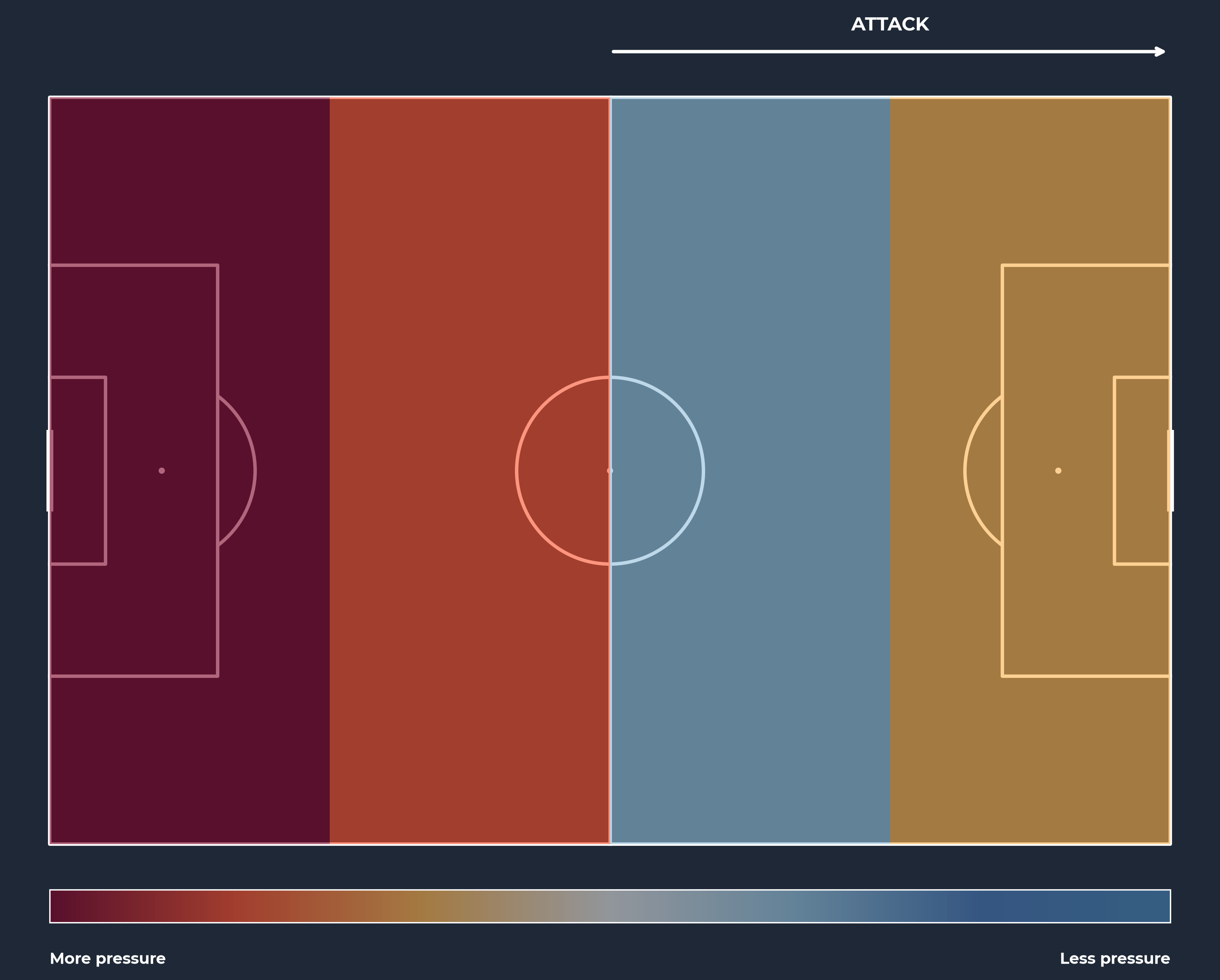
However, Canada’s territorial dominance proved unproductive. The team lacked the final-third creativity required to translate these recoveries into clear-cut goalscoring opportunities. On the rare occasions when the Moroccan defensive lines were breached and Canada managed to register dangerous shots, they were thwarted by exceptional saves from goalkeeper Bono.
Conversely, the opening half presented tactical alignment issues and an early setback for Morocco: Saibari suffered a hamstring injury and had to be substituted, altering the planned midfield dynamics. The match became intensely physical, cagey, and hard-fought, characterized by a high volume of fouls and a flurry of yellow cards shown to both sides.
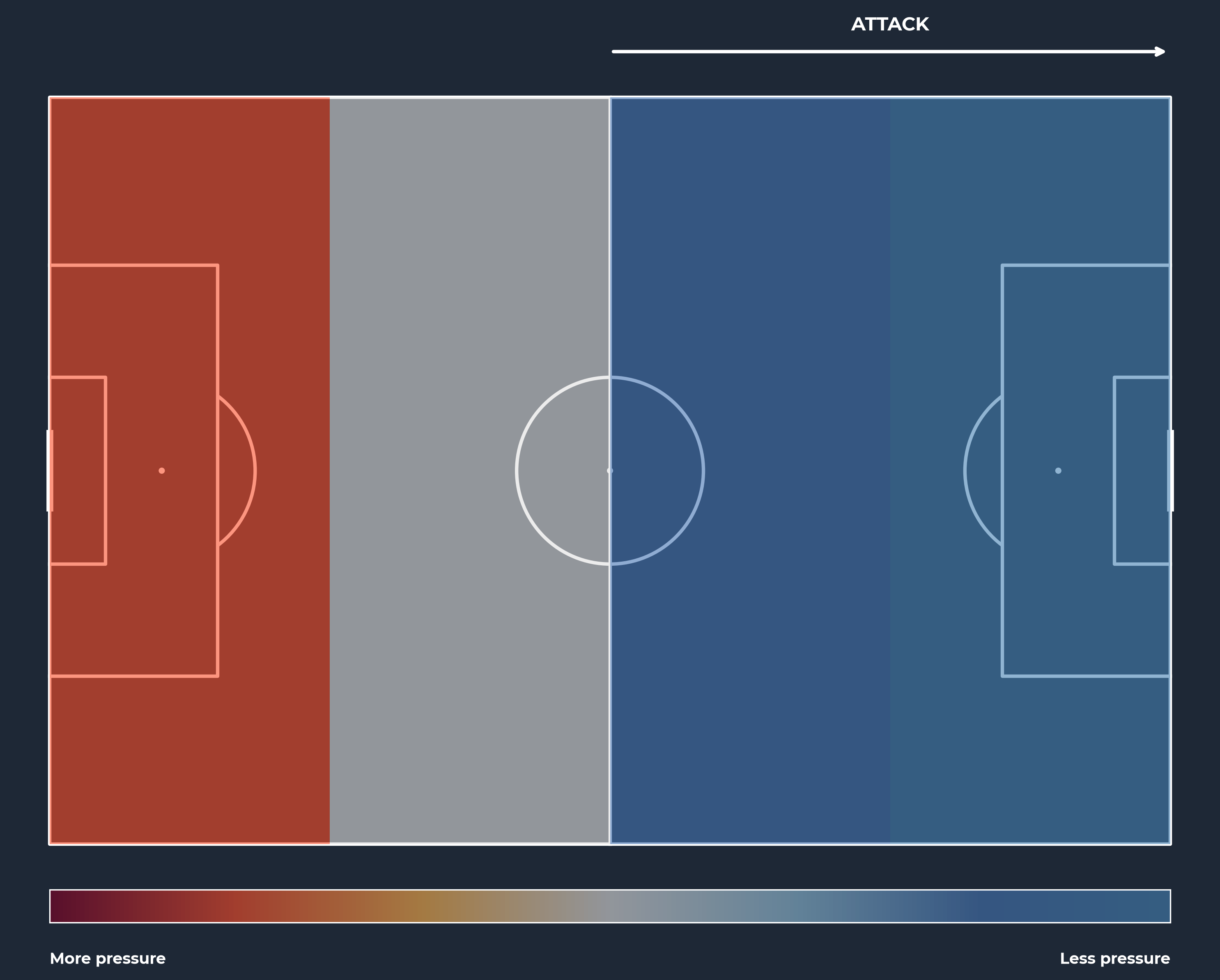
Morocco’s PPDA map clearly demonstrates that the team refrained from pressing high up the pitch (indicated by the cooler tones in the attacking zones), opting instead to defend in a compact mid-to-low block to protect the periphery of their 18-yard box.
Second Half: Canadian fatigue and Morocco's lethal efficiency
The intense physical output sustained by Canada during their first-half pressing and tackling inevitably took its toll. In the second half, they could no longer execute their counter-pressing with the same intensity and efficiency.
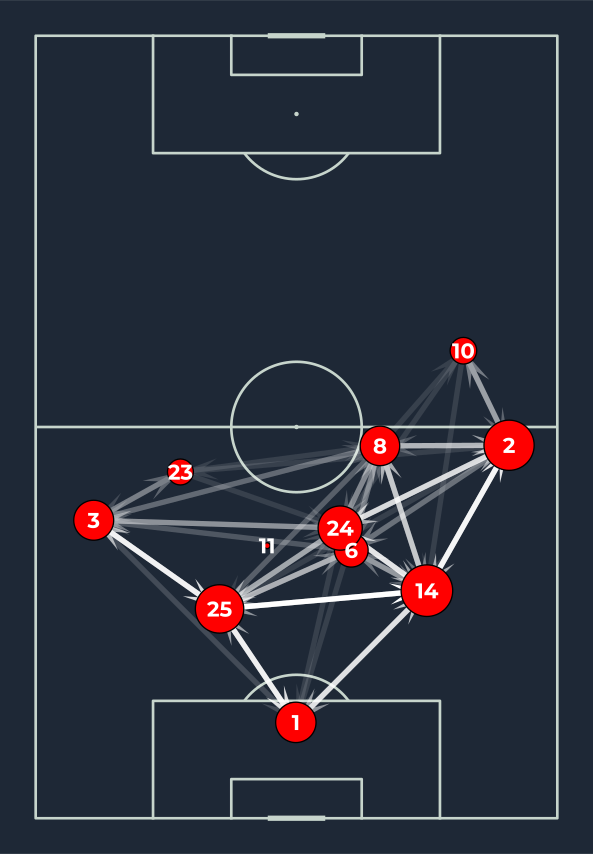
Granted more time and space on the ball, Morocco rebalanced the flow of the game and began finding passing lanes that were previously closed off. Morocco’s passing network highlights a strong connection between goalkeeper Bono (1), the central defenders, and rapid transitions down the wings, particularly through the right channel via Hakimi (2).
The match was shaping up to be a classic tactical chess match decided by the finest of margins. Prior to the opening goal, both keepers were rarely tested, and neither side could carve out clear chances through open play. The definitive breakthrough that shattered the deadlock came from a set-piece: following a cleverly worked routine from a lateral free-kick, Morocco opened the scoring.
The opening goal completely altered the tactical landscape of the match. Forced to commit bodies forward in search of an equalizer, Canada pushed their lines high up the pitch, creating the ideal scenario for the Moroccan counter-attack.
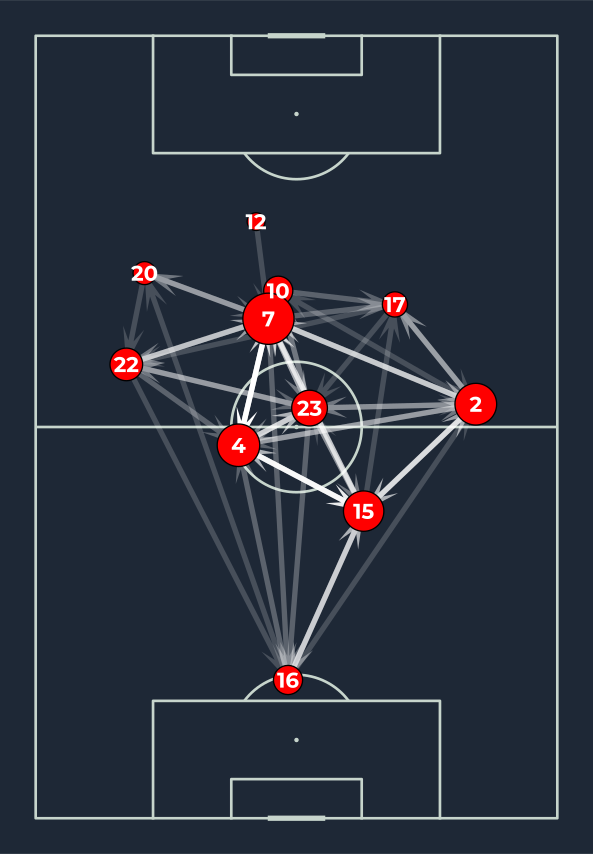
Canada’s passing network reflects a circulation strategy that heavily targeted the flanks (utilizing Alistair Johnston (2), Richie Laryea (22), and Eustáquio (7)) but relied on long, predictable distributions with minimal central penetration to disrupt Morocco’s defensive shape.
Morocco’s second goal could have arrived sooner but was delayed by a lack of precision in the final pass. However, their persistence eventually paid off: during a lightning-fast transition, Brahim Díaz drove down the right wing, dragging defenders out of position before laying it off to midfielder Ounahi, who finished calmly into the back of the net to double the lead.
Deep into stoppage time, Morocco fully exploited the vacant spaces left by a desperate Canadian backline. Following a crucial interception, Brahim Díaz slipped a perfectly weighted through-ball to Rahimi, who, completely unmarked, slotted home the third goal to seal a resounding victory.
Conclusion
Morocco’s victory was fully deserved, substantiated primarily by their ability to remain lethal and efficient in key moments of the match, alongside a resilient defensive display when Canada held territorial dominance.
Despite the comfortable scoreline and subsequent qualification, the performance serves as a tactical warning for the Moroccan coaching staff. If the team intends to progress further and compete against elite tournament favorites in the knockout stages, they must elevate their creative output. Relying solely on low-block defensive resilience, set-piece routines, and late-game transitions may prove insufficient against top-tier opponents who commit fewer defensive transition errors than Canada did.
For the Canadians, the match leaves a valuable lesson: controlling a game based purely on physical intensity and aggressive pressing requires a level of offensive efficiency and clinical execution that the team, on this occasion, failed to deliver.
Paraguay x France
Introduction
In a duel that tested European patience against South American resilience, France edged out Paraguay with a narrow 1-0 victory. The clash was defined by aggressive tackling, player provocations, and few clear-cut goalscoring opportunities.
The clash of styles was evident from the opening lineups. The French national team took the pitch structured in a 4-2-3-1 formation, trusting Kylian Mbappé through the middle as a striker. To supply him, the team relied on a highly explosive trio of attacking midfielders: Dembélé, Olise, and Barcola. On the other side, Paraguay completely abdicated attacking intent to build an absolute fortress. Positioned in a rigid 5-4-1 system, the South Americans congested the edge of their own box, prioritizing defensive destruction and closing down passing lanes.
Match Summary and Tactical Analysis
First Half: High tension and the South American low block
The opening period saw very little fluid play and an immense amount of physical contact. Paraguay executed their defensive game plan to perfection: they dropped their lines, closed the internal corridors, and consistently broke up the play with tactical fouls to disrupt France’s rhythm.
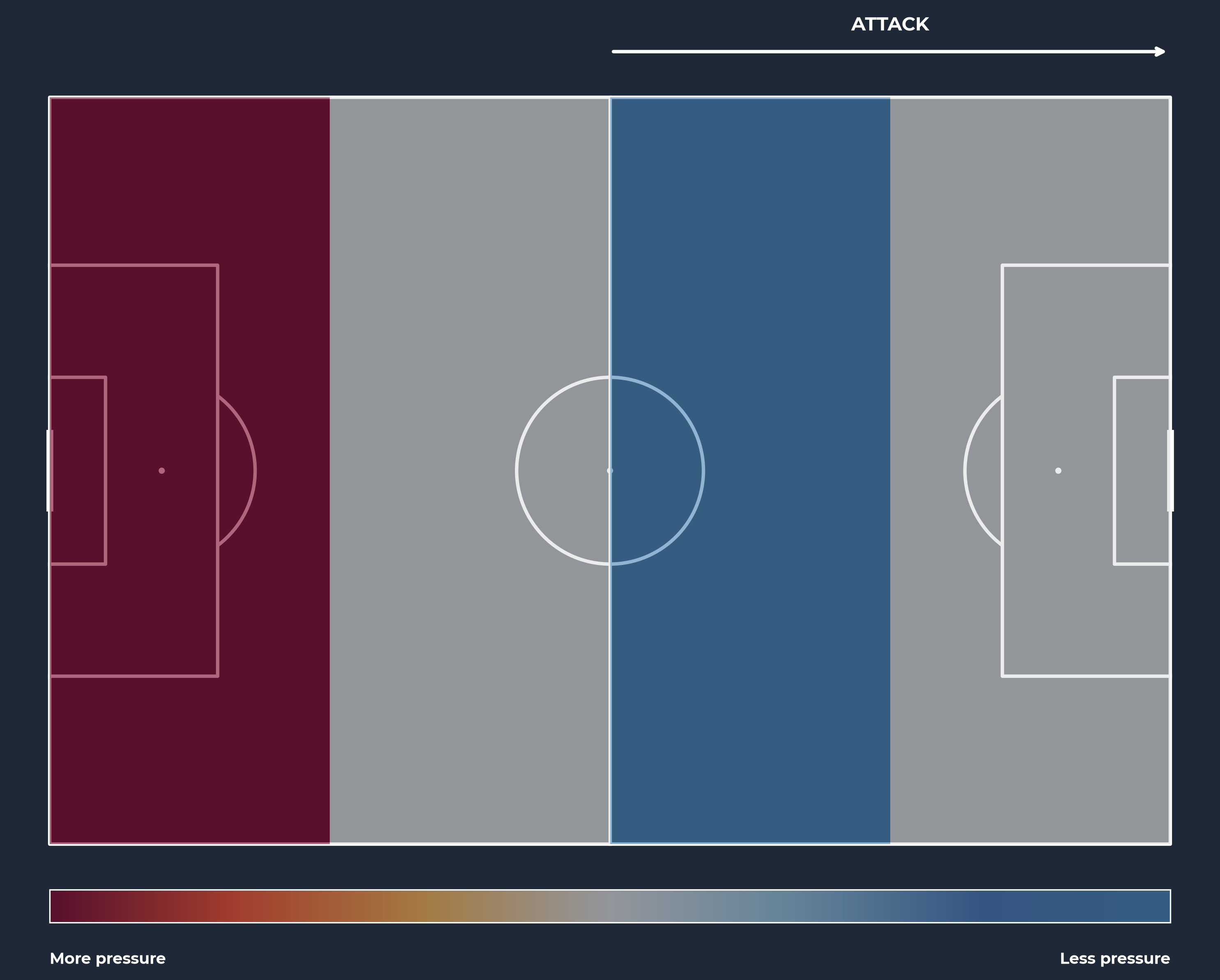
Paraguay’s PPDA (Passes per Defensive Action) map clearly illustrates this approach. The team concentrated its pressing almost exclusively within its own defensive third, adopting a deeply reactive posture and waiting for France to dictate the play before attempting to intervene near their own penalty area.
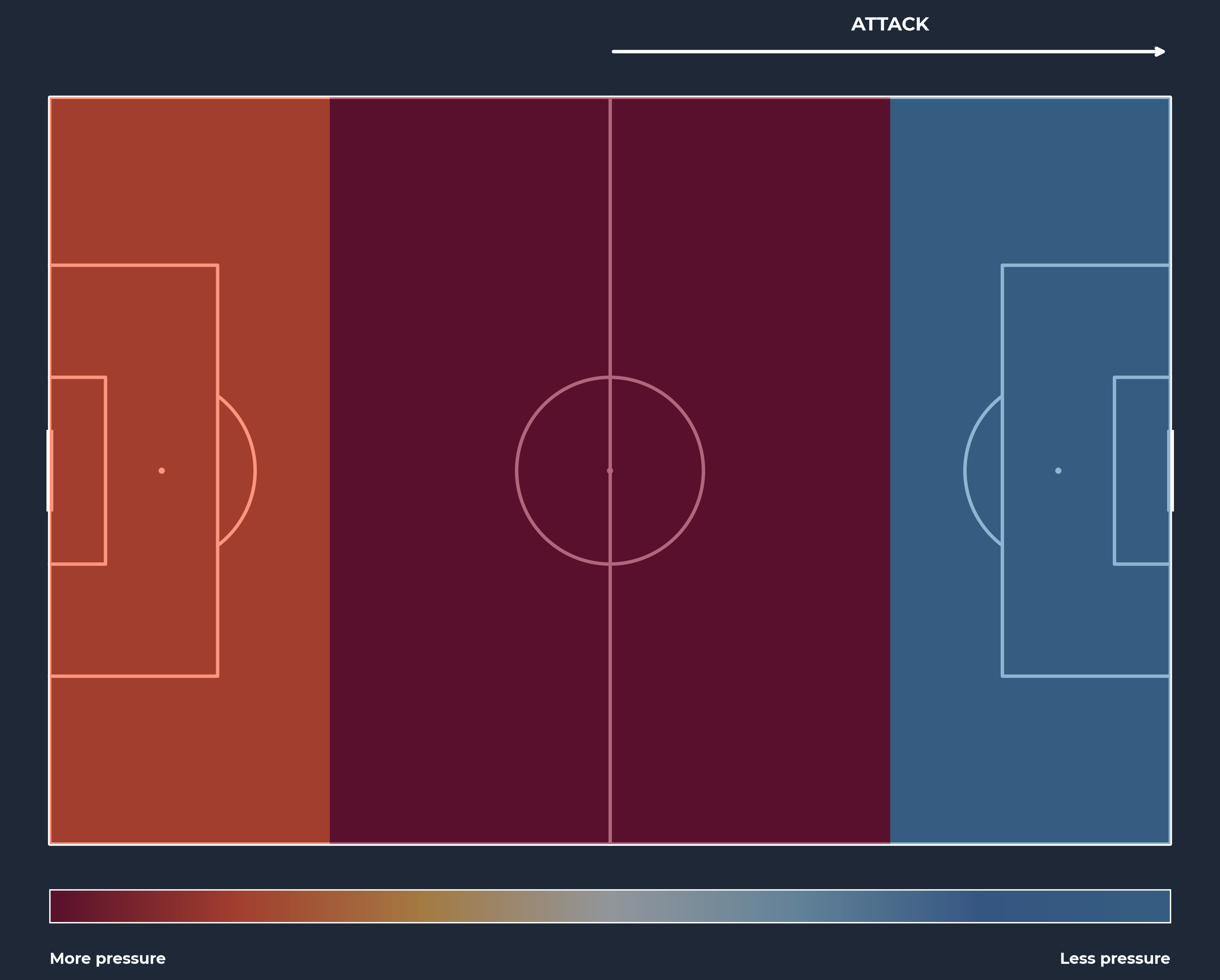
In contrast, France attempted to suffocate their opponent immediately upon losing possession. The French PPDA map displays an incredibly high intensity of counter-pressing in the attacking half (warmer heat map tones). However, this massive volume of possession failed to translate into high-quality chances. On the rare occasions France did manage a dangerous shot on target, they ran into an outstanding performance by the Paraguayan goalkeeper, who took center stage with a spectacular save, tipping away a powerful long-range effort from Dembélé.
Second Half: Monopoly of possession and the fatal mistake
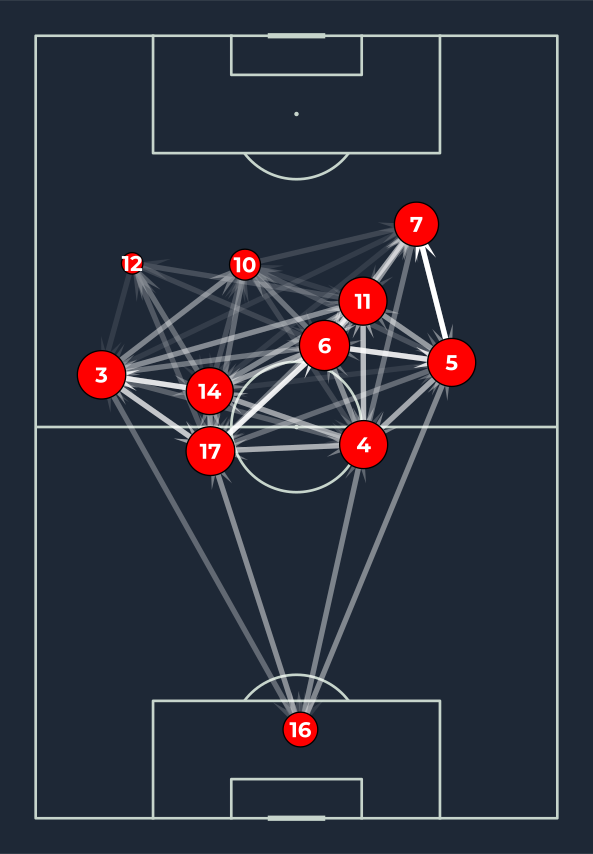
Following the interval, the “attack vs. defense” narrative became even more pronounced. The passing networks of both teams lay bare the massive gulf in controlling the match. France’s passing chart demonstrates active ball circulation across the entirety of the attacking third, with an immense volume of touches between defenders and midfielders in a persistent bid to find a breach in the opposition’s low block.
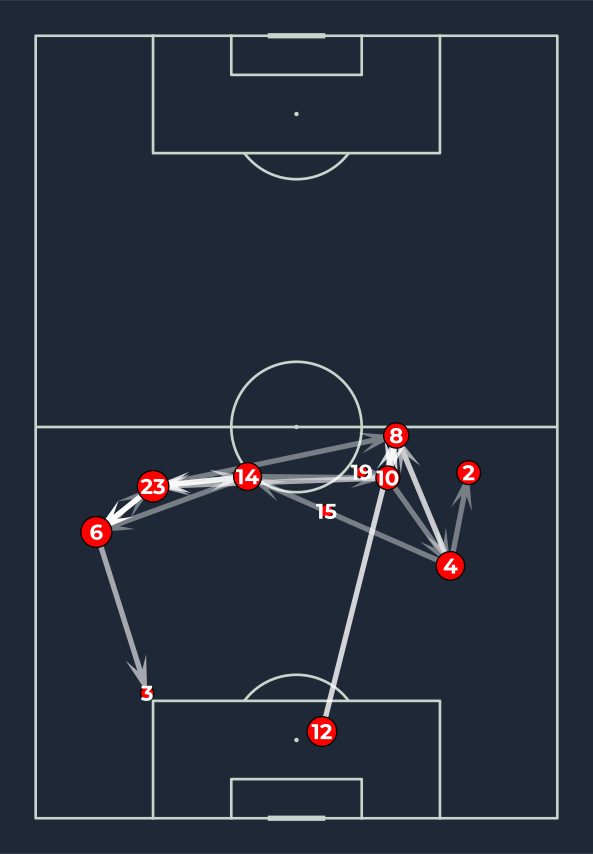
Conversely, Paraguay’s passing network reflects the total isolation of their players. With scarce connections and virtually no coordinated transitions forward, the team confined itself to clearing the danger, maintaining a deep block and pinning their hopes on a potential counter-attack.
Since the breakthrough was not arriving through open play and the Paraguayan keeper remained rock-solid, the match-winning goal was ultimately born from a defensive error. In one of the few instances where the French attack managed to carry the ball under control inside the box, the Paraguayan defense committed a foul, conceding a penalty. Mbappé stepped up to the spot, slotted it away with cold composure, and scored the only goal of the match, finally breaking the South American resistance.
Conclusion
The victory rewards France for being the only side that actively pursued the attack over the 90 minutes, but it serves as a crucial warning sign. Their significant difficulty in generating clean shots against highly congested, deep defensive blocks will need to be addressed, as the level of tactical demand will increase considerably in the upcoming knockout rounds of the World Cup.
For Paraguay, the result brings elimination, but also the recognition of a squad that pushed its game plan to its absolute limits. Their defensive discipline and the stellar performance of their goalkeeper frustrated the French attack for nearly the entire match, proving that rigorous organization and high competitiveness are attributes fully capable of bridging the technical gap against the world’s elite powerhouses.
Enjoy Reading This Article?
Here are some more articles you might like to read next: