Analysis: Portugal x Spain and Belgium x USA - 2026 World Cup
Se quiser ler este texto em pt-br, clique aqui.
Analysis: Portugal vs. Spain
In the clash that sealed the Portuguese national team’s elimination, Spain secured their qualification by demonstrating clear structural and collective superiority. Throughout the 90 minutes, the match evidenced a sharp tactical contrast: while the Spaniards operated in a fluid and interconnected manner, Portugal once again displayed a deficit in chance creation, revealing a profound difficulty in progressing into the final third, penetrating the opposition’s penalty area, and activating their main finisher in high-probability scoring zones.
Match Summary and Tactical Analysis
Offensive Disconnection and the Isolation of the Forward Line
The first half perfectly illustrated the contradiction within the Portuguese offensive model. In rare moments of verticality where the team managed to access Cristiano Ronaldo with quality, the impact was immediate, demanding at least two high-level interventions from goalkeeper Unai Simón. However, this dynamic proved unsustainable throughout the match.
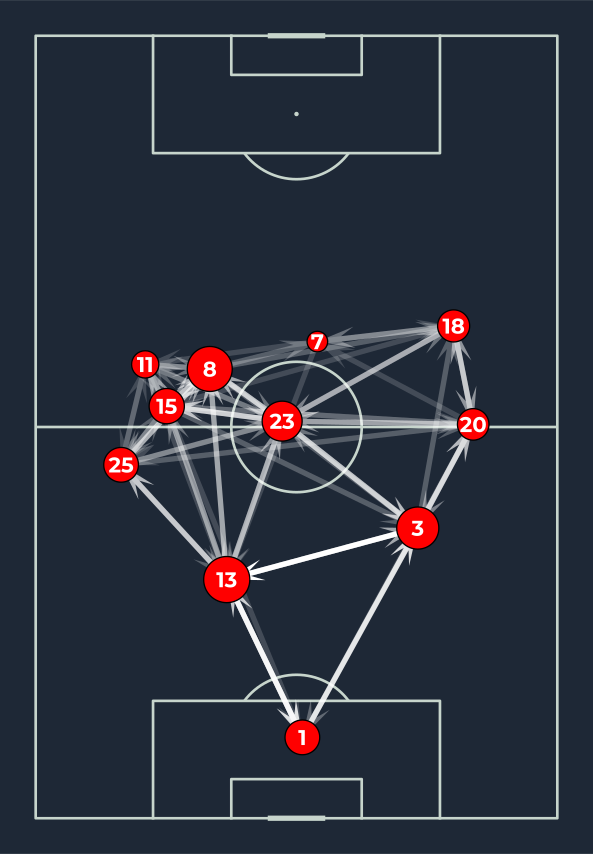
In the second half, the distance between the midfield and the number 7 became undeniable. Portugal failed to maintain offensive consistency, did not generate volume in the final third, and struggled immensely to connect its forward players. The Portuguese team’s passing network perfectly synthesizes this structural flaw. The map reveals a heavy concentration of ball possession in the intermediate and defensive zones, configuring sterile circulation that rarely broke the Spanish block. The presence of an elite finisher was underutilized, a fact highlighted by the tactical isolation of the number 7 at the top of the structure: the scarce passing lanes reaching him reflect the collective inability to establish consistent progressive routes and supply the striker with quality.
Sectoral Asymmetry: The Dominance of the Spanish Right Flank
Direct duel metrics and territorial control help explain the competitive discrepancy between the two national teams, especially through the analysis of the flanks. Spain’s right side established a tactical and technical dominance over Portugal’s right side.
In the build-up phase, Rodri dictated the tempo and outperformed Vitinha, while Pedro Porro was more effective than João Cancelo in providing width. Further up the pitch, even without a stellar performance, Lamine Yamal produced a greater impact in the final third than Pedro Neto, and Dani Olmo displayed a higher index of control and offensive influence than Bruno Fernandes.
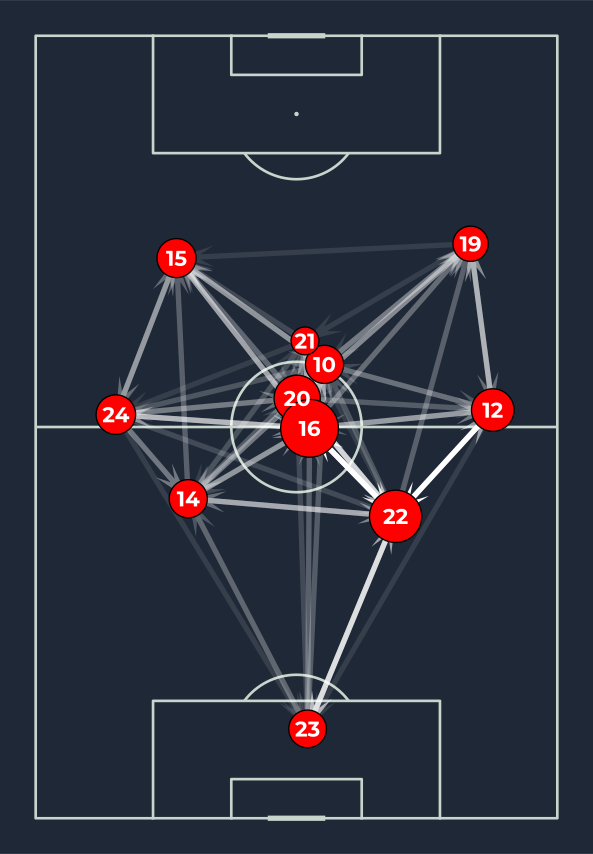
Spain’s passing network demonstrates that the team did not rely on constant individual brilliance, as the mechanism of combinations and triangulations on the right sector functioned harmoniously, generating continuous positional advantages.
Impact of Substitutions and Structural Breakdown
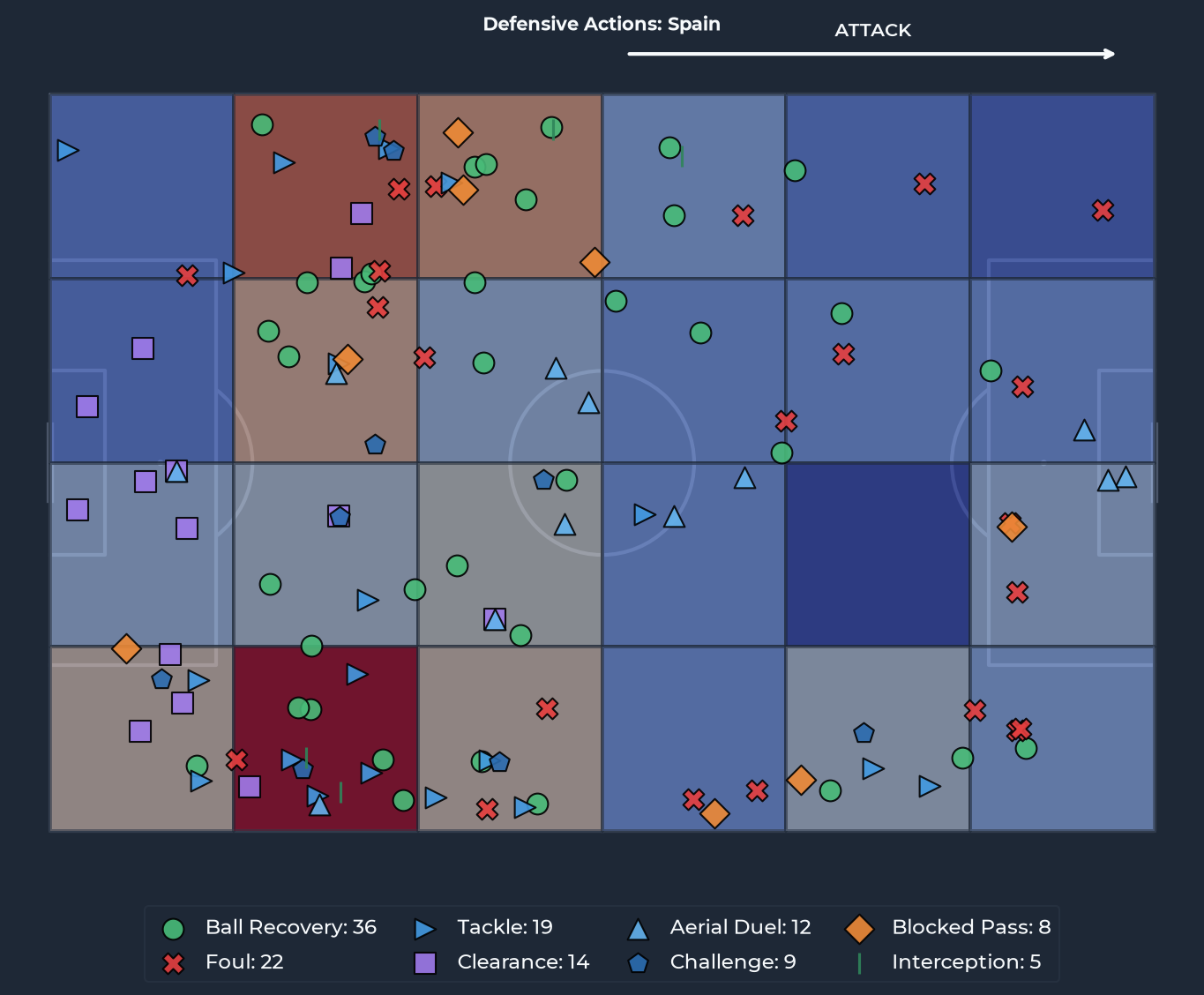
The only sector where Portugal managed to dictate some rhythm and concentrate their offensive incursions was down their left side. The quartet formed by Renato Veiga, Nuno Mendes, João Neves, and João Félix delivered the balance and momentum that were lacking on the opposite flank. The strength of the Portuguese attacks down this wing demanded a considerable effort from the opposing defense. As illustrated by Spain’s defensive actions map, there is a strong concentration of interventions (tackles, interceptions, duels, and fouls) on the Spanish defensive right side, clearly evidencing that Portugal’s left corridor was the team’s most utilized and dangerous offensive route in the match.
However, Nuno Mendes’ substitution represented a turning point in the match. The change generated an abrupt drop in the effectiveness of defensive and offensive actions in that sector, the exact moment when Lamine Yamal began to find the spaces that had previously been denied to him by the Portuguese full-back’s solidity. Although Nelson Semedo competed physically, the success rate in containment and progression dropped drastically without Nuno Mendes.
The reading of the game and the timing of the Portuguese substitutions also worsened the situation. Vitinha, who was unable to dictate the tempo, remained on the pitch for too long, compromising possession control. Simultaneously, the introduction of Rafael Leão was delayed, and his entry at the expense of João Félix dismantled the only mechanism that was operating with any fluidity on the left flank. The attempted adjustments occurred too late and failed to correct the primary flaw: the stagnation of the ball on the offensive perimeter without penetration.
The Decisive Goal
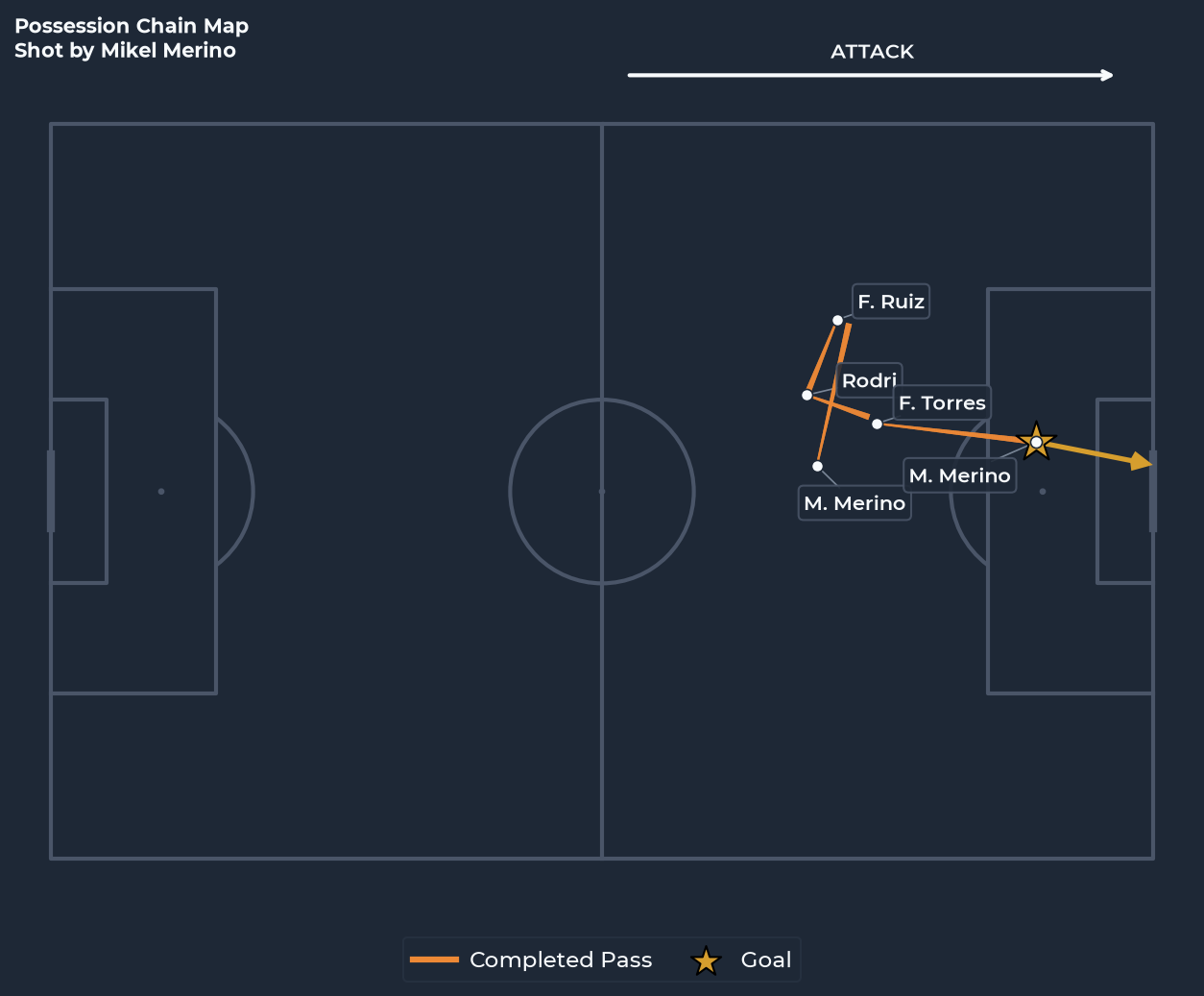
The collective superiority and patience in the Spanish build-up were crowned in the sequence that decided the scoreline. The possession chain that culminated in Mikel Merino’s goal is a practical portrayal of the team’s fluidity, circulating the ball until finding the ideal space for the decisive finish.
Conclusion
Spain’s qualification is the direct reflection of a collectively superior team, capable of generating constant positional advantages, especially down their right side, without relying on isolated individual brilliance.
For Portugal, the elimination leaves profound structural lessons. The downfall cannot be explained solely by a single player’s performance or the undeniable quality of the opponent, but by a lack of collective clarity. The Portuguese system was left in a tactical limbo: it neither built efficient mechanisms to maximize its main finisher inside the box nor found ways to flow offensively without depending on him. The end result is a national team abundant in technical talent across all sectors, but incapable of translating possession control into a dangerous and consistent offensive structure.
Match Analysis: Belgium 4-1 USA — 2026 World Cup
Introduction
On Monday (07/06), Belgium secured a commanding 4-1 victory over the United States at Lumen Field, in Seattle. The result punches the Belgian national team’s ticket to the quarter-finals while simultaneously sending off the tournament hosts.
In terms of starting lineups, the USA set up in a 3-5-2 formation, aiming to pack the midfield and use their wing-backs to provide width. Belgium, on the other hand, opted for a 4-2-3-1, deploying forward Charles De Ketelaere right through the center.
Match Summary & Tactical Analysis
First Half: Belgian Dominance and Instant Responses
The opening 45 minutes were defined by Belgium’s clear superiority. They imposed themselves through a rock-solid defensive setup and patient possession. Instead of desperately pressing high up the pitch, the team dictated the tempo by controlling space and shutting down the US advances.
As shown in the PPDA (Passes per Defensive Action) map, the Belgian side chose not to aggressively press the opponent’s build-up play, leaving the attacking third (the cool-toned zone) under light pressure. Instead, Belgium’s strategy was about patience and containment: the defensive block waited for the USA to advance before triggering aggressive pressing in their own half, cleanly winning back possession and launching rapid transitions.
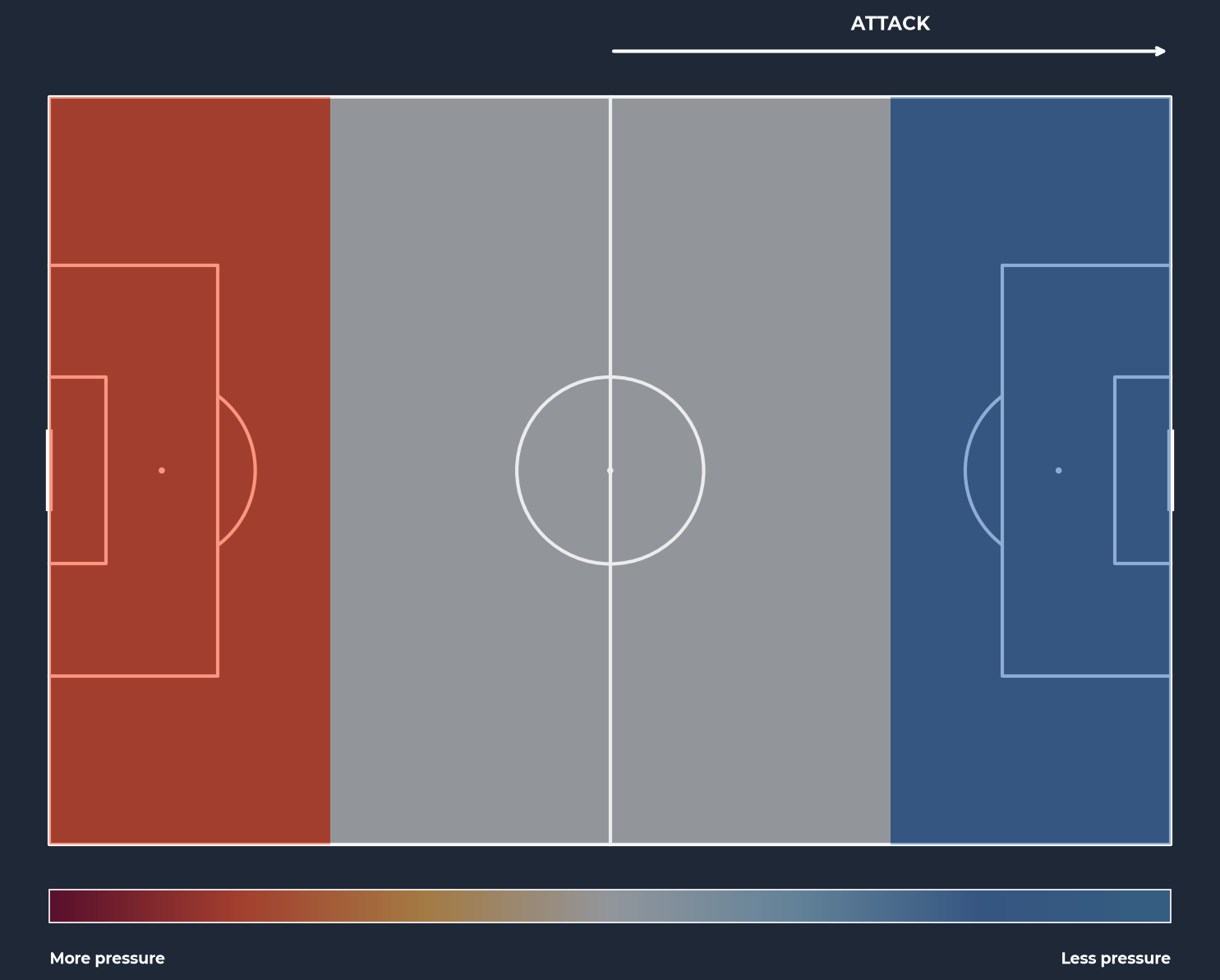
The USA tried to build through the flanks, utilizing wing-backs like Tillman and Dest to slow down the tempo and control the game. However, a flurry of misplaced passes in midfield invited rapid counter-attacks from Belgium, who easily exploited the left flank—particularly through Tielemans’ overlapping runs.
This territorial dominance finally paid off when a dangerous cross from Trossard broke the deadlock, putting the Belgians ahead. Chasing the game, the USA tried to respond, but repeatedly ran into a brick wall: the European defense.
The American breakthrough only came after the hydration break, when the team found better control in central areas and won a dangerous free-kick. Confirming their prowess on set-pieces in this tournament, the USA equalized via a strike that deflected off the wall.
However, Belgium’s greatest virtue in this match was their mental resilience and sheer pace. Immediately after conceding, they hit back with a lightning-fast transition. Another precise cross from Trossard found De Ketelaere, who restored the Europeans’ lead.
Second Half: Tactical Adjustments and Exploiting Space
Trailing and playing in front of a home crowd, the United States came out with a much more aggressive posture in the second half. This shift allowed the USA to retain more possession and balance out the midfield battles. However, an analysis of the American pass network reveals that despite having more of the ball, their attacking play was slow and predictable, finding it incredibly difficult to break down a well-drilled Belgian defense.
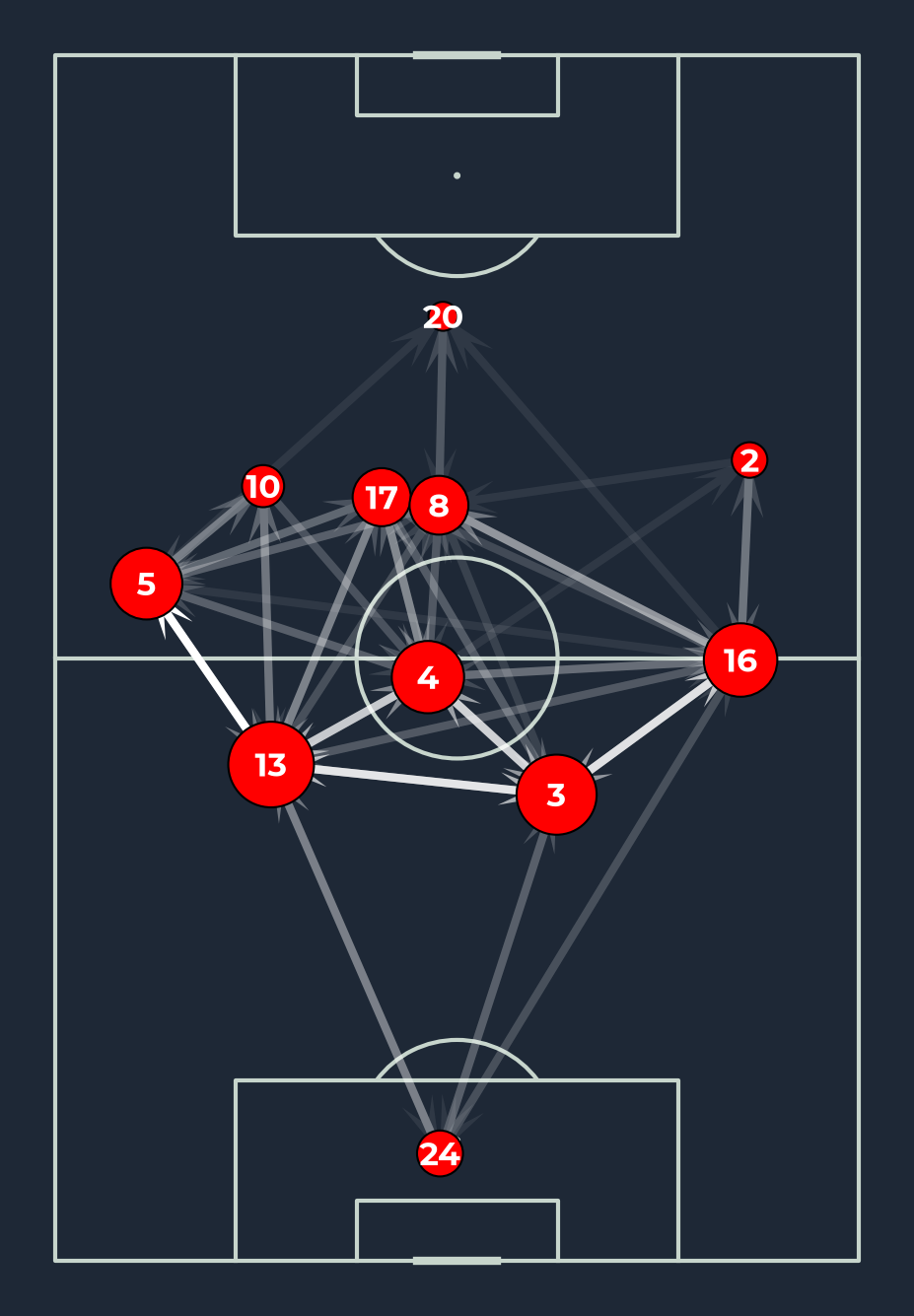
Faced with this new dynamic, Belgium showed great tactical intelligence. Instead of trying to force possession under heavy pressure, they adapted their game plan: they lured the opponent forward and began to surgically exploit the massive space left behind the high US defensive line using long balls.
The Belgian pass network perfectly captures this tactical shift. The data shows a team that knew how to stay compact defensively and immediately pick out their forwards with longer, more direct passes to punish the USA’s defensive exposure.
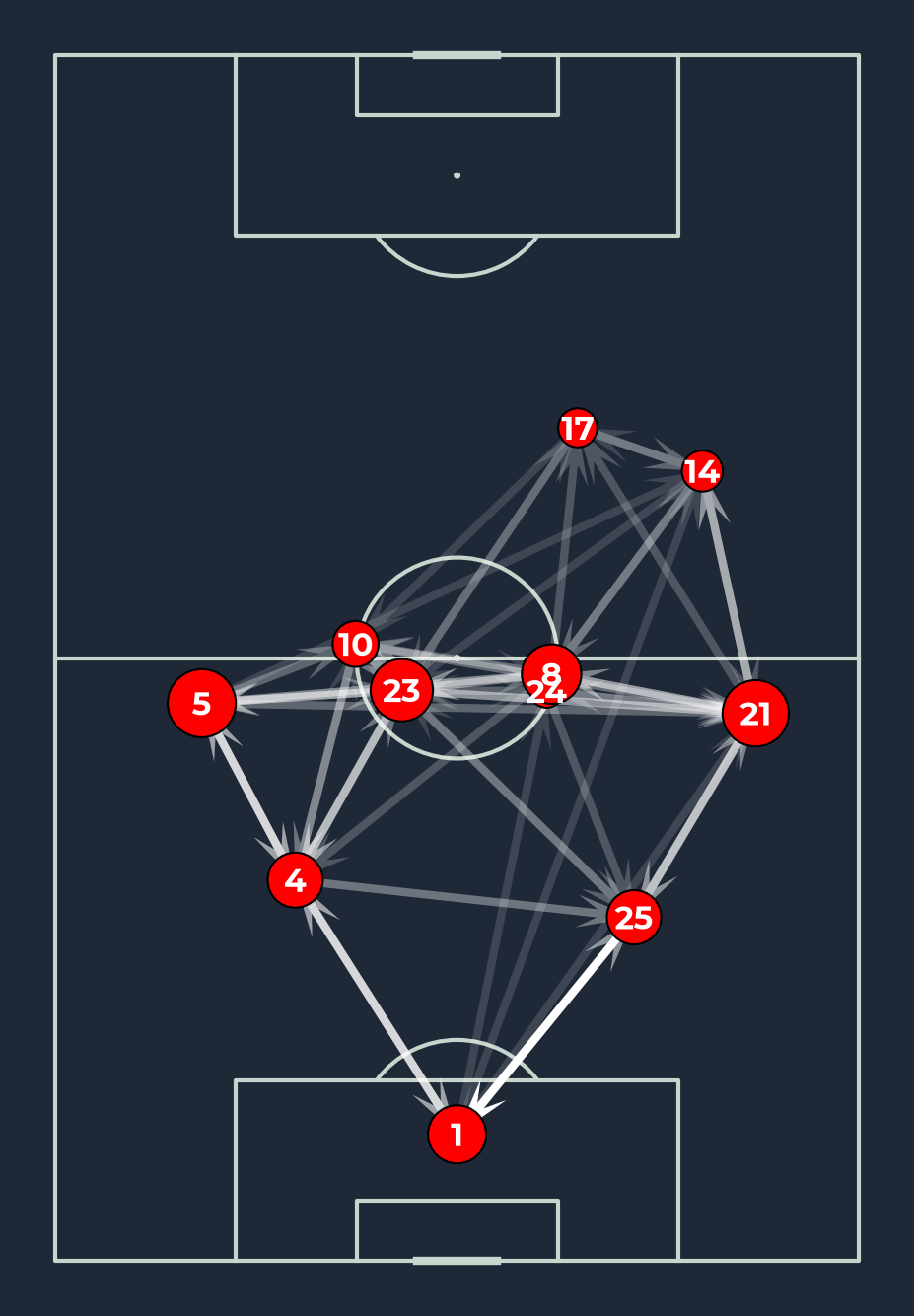
It was exactly on a long ball that the US goalkeeper misjudged his line, allowing the Belgian attack to capitalize and slot home the third goal. The goal was a massive blow to the hosts, who subsequently threw themselves into attack in a desperate and disorganized manner.
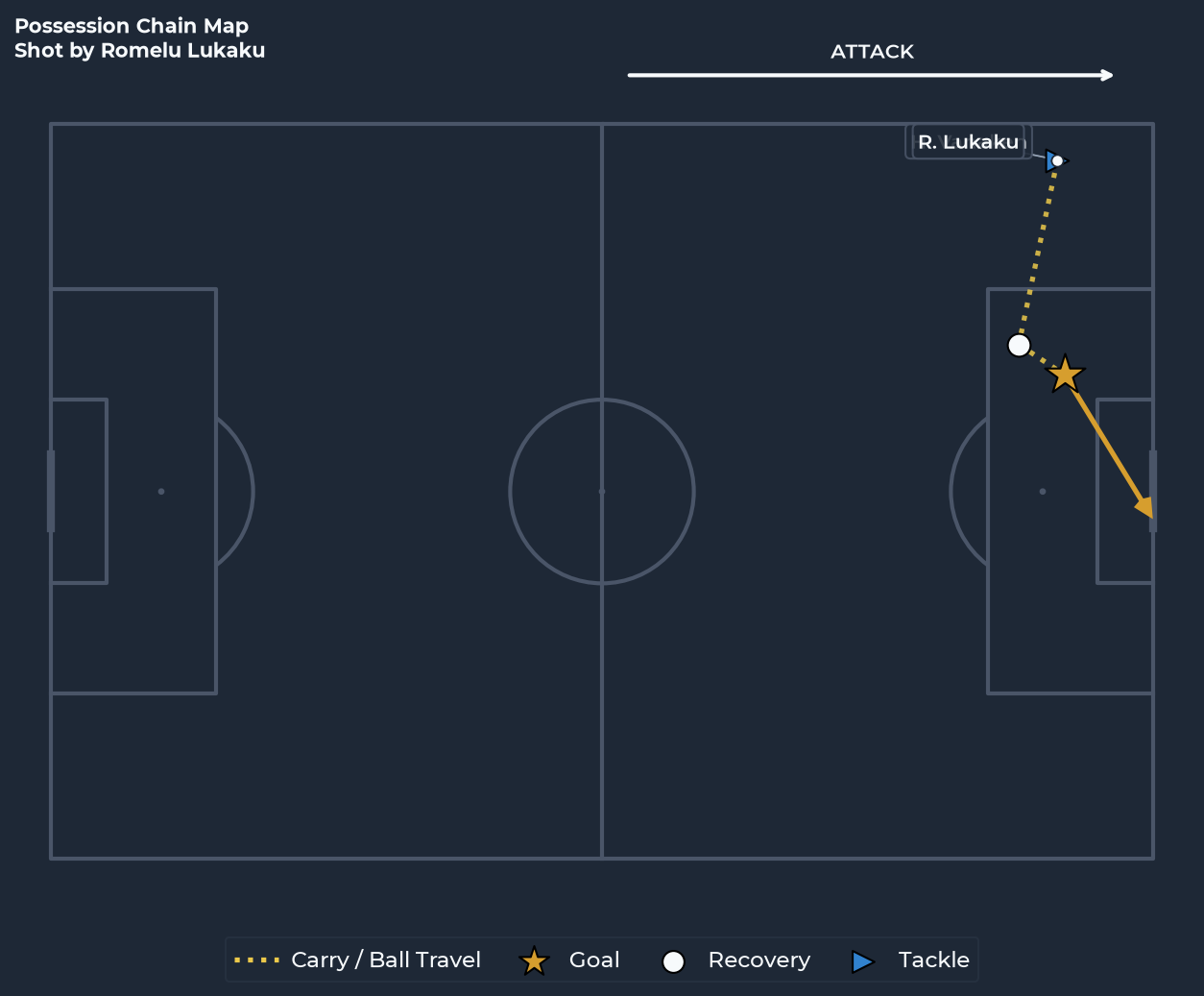
As the clock ticked down, Belgium simply managed the tempo, neutralizing any danger and injecting fresh legs with the late substitutions of Romelu Lukaku and Jérémy Doku. The changes paid off immediately: after relentless pressure on an already exhausted American backline, the Belgians forced a costly mistake trying to play out from the back. The loose ball fell perfectly to Lukaku, who made no mistake and smashed home the fourth goal, killing off any hopes of a comeback.
Conclusion
This resounding victory serves as a massive confidence booster for Belgium. The team surprised many by showcasing a high-tempo, fluid attacking style during transitions. Their ability to alter their tactical approach — patiently dictating play in the first half and ruthlessly exploiting counter-attacks in the second — proves they have the tactical depth required for the business end of the tournament.
For the United States, a painful elimination on home soil leaves clear lessons. Despite their second-half fightback and their constant threat from set-pieces, their defensive vulnerability when exposed to rapid transitions and crucial individual errors proved far too costly against elite opposition.
Enjoy Reading This Article?
Here are some more articles you might like to read next: